

Bus & Coach Plastic Parts
Overview
Where It’s Used
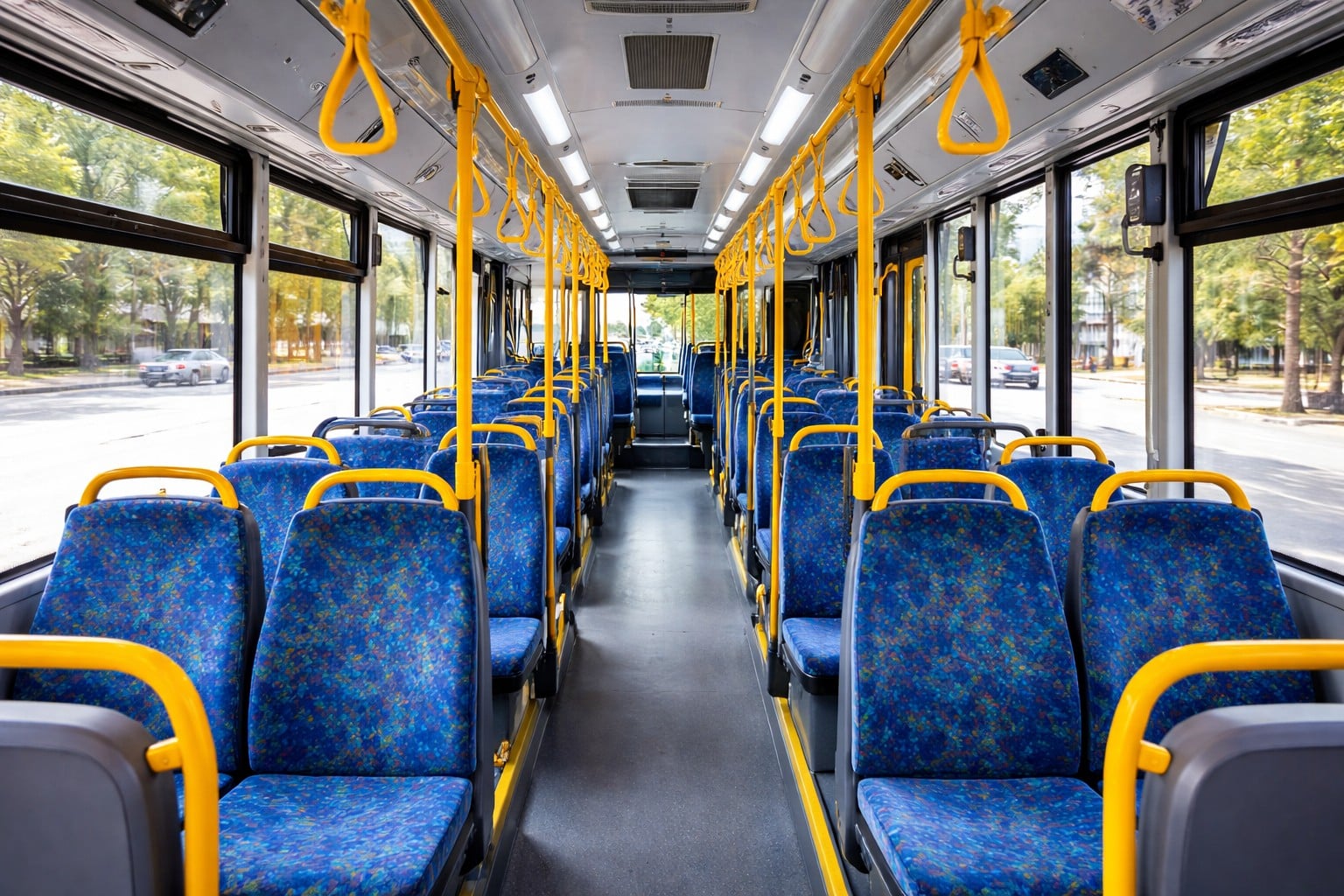
Public transport buses
Long-distance coaches
School buses
Shuttle and fleet vehicles
Tourism and charter vehicles
Specialised passenger transport units
Components may be installed during OEM build, mid-life refurbishment, or fleet maintenance programs.
Why Plastic Is Used
Plastic is widely specified in bus and coach applications because it:
Reduces overall vehicle weight
Resists corrosion and moisture
Tolerates vibration and passenger traffic
Offers impact resistance in high-contact areas
Provides electrical insulation
Can be formed and machined to complex geometries
Material selection must account for durability, compliance, passenger safety, and service life.
Recommended Materials for Bus Components & Parts
Custom Manufactured to Your Drawings
Bus & coach parts are typically produced to engineering drawings or OEM specifications.
We manufacture from:
CAD files (DXF, DWG, STEP)
Detailed fabrication drawings
Fleet standardisation documentation
Reverse-engineered samples
Production capability supports:
One-off refurbishment parts
Mid-volume fleet rollouts
Repeat production to controlled drawings
All components are CNC machined and fabricated in-house to ensure dimensional accuracy, consistency, and repeatability across vehicle batches.
Popular Bus & Coach Plastic Parts
-
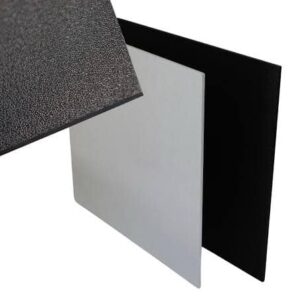
ABS Plastic Sheet
$113.54 – $340.00Price range: $113.54 through $340.00 Select options This product has multiple variants. The options may be chosen on the product page -
Acrylic Sheet (Perspex)
$66.00 – $2,672.40Price range: $66.00 through $2,672.40 Select options This product has multiple variants. The options may be chosen on the product page -
Polycarbonate Sheet (UV Resistant)
$101.20 – $3,554.07Price range: $101.20 through $3,554.07 Select options This product has multiple variants. The options may be chosen on the product page -
Rigid PVC Sheet
$40.43 – $962.50Price range: $40.43 through $962.50 Select options This product has multiple variants. The options may be chosen on the product page
Typical Applications
Interior wall and ceiling panels
Seat back panels
Driver cabin partitions
Luggage compartment liners
Access panels and covers
Instrument and dashboard panels
Glazing inserts
Wheel arch liners
Protective kick panels
Battery and electrical enclosures
Key Performance Requirements
-
Impact resistance in high-traffic areas
-
Abrasion resistance from passenger use
-
Structural stability when mounted
-
Resistance to cracking under vibration
-
Strength at fixing points
-
UV resistance for exposed glazing
-
Flame retardancy where required
-
Resistance to cleaning chemicals
-
Moisture resistance
-
Dimensional stability under thermal cycling
Manufacturing & Fabrication
Bus & coach parts are manufactured using:
CNC routing for profiling and cut-outs
Precision drilling and countersinking
Plastic bending for formed returns
Plastic welding for sealed or structural assemblies
Laser cutting for detailed thinner components
Vacuum forming for shaped interior panels
Flame polishing or decorative finishing is avoided in high-load areas where edge strength is critical.
Fabrication processes are selected according to performance requirements rather than appearance alone.
Design & Installation Considerations
Confirm compliance requirements (e.g., flame rating)
Avoid sharp internal corners
Specify appropriate fixing intervals
Allow expansion clearance
Consider replaceable wear sections
Ensure consistent panel alignment to prevent vibration
Drawing clarity directly affects installation efficiency and long-term durability.
Alternative Options:
All components used in this application are manufactured in-house using controlled, drawing-led production processes. We do not supply generic or off-the-shelf products. Each part is produced to specification to meet defined mechanical, environmental, and installation requirements.
Frequently Asked Questions
Components are manufactured to drawing and can suit OEM or retrofit applications.
Yes, subject to material grade selection.
Yes. Single units and small batch production are supported.
Material selection is aligned to passenger use and impact exposure.
Yes, with drawings or reverse engineering.
Thickness depends on load and mounting method, commonly 3–12mm.