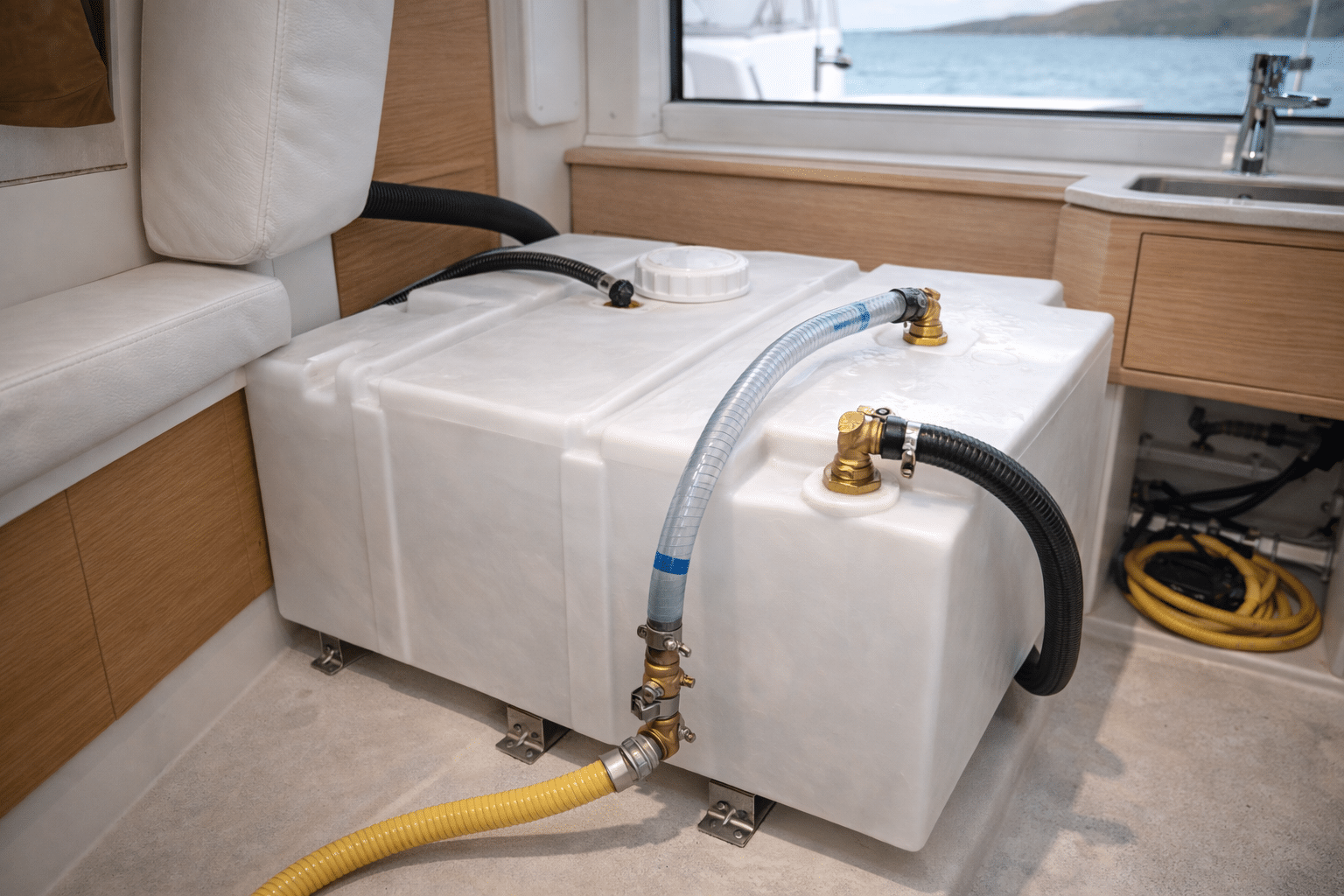
Marine Plastic Tanks
Overview
Marine plastic tanks are used for storing fuel, water, waste, and other fluids in boats and marine vessels. Compared to metal tanks, plastic tanks offer corrosion resistance, weight reduction, and long-term durability in harsh marine environments.
We manufacture custom marine tanks to customer drawings and specifications, supplying welded plastic tanks ready for installation.
Custom Manufactured to Your Drawings
Marine tanks are almost always custom due to hull shapes, access constraints, and mounting requirements.
We manufacture marine tanks from:
-
CAD files (STEP, DWG, DXF)
-
Dimensioned sketches or PDFs
-
Existing tanks supplied as samples
-
Site measurements for replacement
Tanks can be supplied as one-off builds or repeat production runs.
Fully engineered drawings are not required — accurate dimensions and fitting requirements are sufficient.
Typical Marine Tank Applications
Plastic marine tanks are commonly used for:
-
Fresh water tanks
-
Grey water tanks
-
Black water (waste) tanks
-
Fuel tanks (where compliant material is specified)
-
Secondary containment tanks
Applications range from small recreational vessels to commercial marine installations.
Key Performance Requirements
Marine tank design depends on:
-
Type of fluid (water, fuel, waste)
-
Chemical compatibility
-
Sloshing loads and vessel movement
-
Venting and inspection access
-
Weight distribution
-
UV exposure (above-deck installations)
Correct material and fabrication methods are critical in marine environments.
Recommended Materials for Marine Tanks
Material Selection Summary
- Most common marine tank material: HDPE
- Excellent resistance to aggressive chemicals: Polypropylene
- Suitable for certain waste or process tanks: PVC
Important Note on Fuel Tanks
Fuel tanks must comply with relevant marine and safety standards. Material selection and design must match regulatory requirements. Final compliance rests with the vessel builder or installer.
Manufacturing & Fabrication
Marine tanks are fabricated from flat sheet using plastic welding and precision-cut panels.
Plastic Welding
Used for:
-
Panel joining
-
Seam welding
-
Structural reinforcement
-
Outlet and fitting integration
Panels are welded to form sealed, rigid vessels.
CNC Machining
Used for:
-
Precision-cut tank panels
-
Baffles and internal supports
-
Flange openings
-
Lid and access ports
Installation Considerations
When designing marine tanks, consider:
-
Allowance for thermal expansion
-
Secure mounting to reduce movement
-
Proper venting
-
Access for cleaning and maintenance
-
Weight distribution within the vessel
Incorrect mounting or poor support can significantly reduce tank life.
Related Tank Applications
- Custom Plastic Tanks
- Vehicle-Mounted Tanks
- Chemical Storage Tanks
This application forms part of our Tanks, Fluid & Containment Systems range.
Send Us Your Drawing
If you have drawings, measurements, or an existing conveyor component to replace, we can manufacture plastic conveyor parts to suit your system.
Frequently Asked Questions
Yes. We can manufacture replacement tanks from drawings, dimensions, or existing samples.
HDPE is most commonly used due to chemical resistance, weldability, and marine durability.
Tanks can be fabricated with integrated outlets and connection points as specified.
Material and design must meet relevant safety and marine standards. We fabricate to specification; compliance requirements must be confirmed before manufacture.
Tank thickness depends on tank size, fluid type, and mounting method. Larger tanks or tanks subject to movement loads typically require thicker material and internal baffles. We can advise based on dimensions and application.
Yes. Internal baffles can be welded into the tank to reduce fluid movement and sloshing, particularly in fuel and water tanks used in marine environments.
Plastic tanks offer corrosion resistance and reduced weight compared to aluminium. However, material choice depends on application, compliance requirements, and installation constraints.