
Building, Construction & Infrastructure

Overview
- Commercial construction contractors
- Civil and infrastructure builders
- Engineering consultancies
- Government and council projects
- Industrial facility operators
- Architectural and fit-out specialists
Typical Requirements
Common engineering and specification considerations across this category include:
Structural versus non-structural load capacity
Impact and abrasion resistance
UV stability for exterior exposure
Chemical compatibility (concrete, cleaning agents, industrial fluids)
Fire or flame retardancy requirements
Moisture and water resistance
Dimensional stability under temperature variation
Slip resistance for flooring or access panels
Compliance with project specifications
Long-term durability in outdoor environments
Material and fabrication selection is typically performance-driven and defined by project drawings.
Material Selection Overview
Material selection depends on environmental exposure, structural demands, and compliance requirements.
Commonly specified materials include:
- HDPE – General-purpose use, chemical resistance, impact tolerance
- Polycarbonate – High impact resistance with transparency
- Acrylic (PMMA) – Optical clarity where high impact is not critical
- UHMWPE – Low friction and high abrasion resistance
- ABS – Good rigidity and surface finish for interior components
- PVC (Rigid) – Chemical resistance and fabrication versatility
Material choice is confirmed against load, exposure, and service life expectations.
When Custom Fabrication Is Required
Most building and infrastructure plastic components are produced to project drawings or engineering specifications. Dimensions, mounting details, cut-outs, and tolerances vary by project and site conditions.
Custom machining, forming, welding, or assembly may be required to:
- Integrate with structural steel or concrete
- Suit retrofit or refurbishment projects
- Meet architectural detailing
- Align with compliance documentation
- Accommodate site-specific constraints
Related Categories
- Industrial, Engineering & Wear Components
- Tanks, Fluid & Containment Systems
- Safety, Protection & Compliance
Explore Building & Infrastructure Applications
- Explore the application pages listed above
- Review our material guides for specification support
- Contact us for technical advice on material suitability
Functional Use Cases
- Surface protection
- Impact shielding
- Equipment enclosure
- Hygienic lining
- Fluid containment
- Electrical isolation
- Wear surface replacement
- Architectural glazing
- Structural infill (non-load bearing)
- Access and inspection
Environmental Exposure Considerations
- Direct sunlight and UV radiation
- High humidity and standing water
- Temperature fluctuations
- Mechanical vibration
- Chemical washdown
- Heavy pedestrian or equipment traffic
Fabrication Processes Used
- CNC routing for accurate profiling and cut-outs
- Plastic bending for formed returns and brackets
- Plastic welding for sealed assemblies
- Laser cutting for thinner gauge precision parts
- Vacuum forming for shaped interior panels
- Machining of engineering plastics for load-bearing elements
Alternative Options:
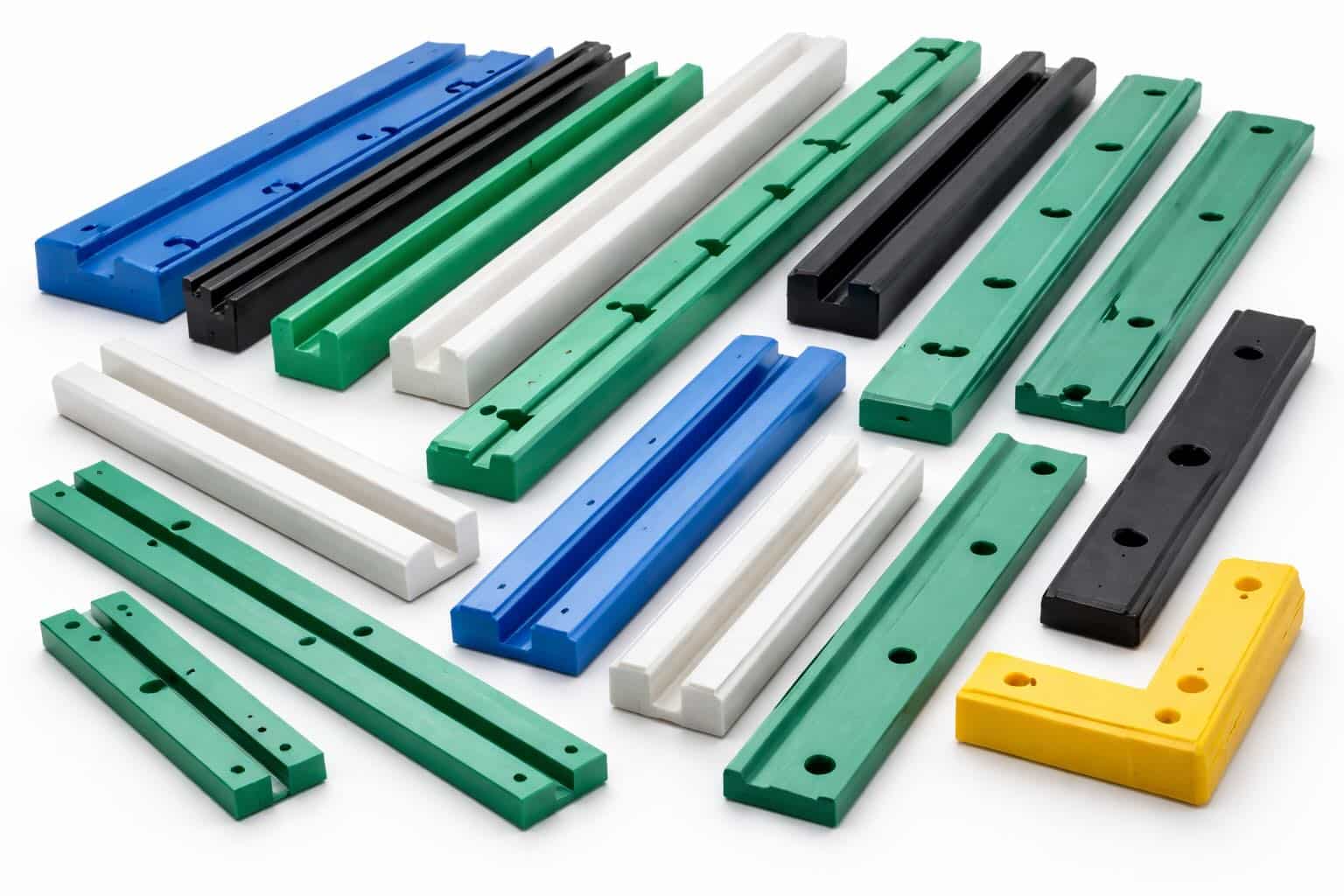
All components used in this application are manufactured in-house using controlled, drawing-led production processes. We do not supply generic or off-the-shelf products. Each part is produced to specification to meet defined mechanical, environmental, and installation requirements.
Our Range of Plastic Products

Not Sure?
Not sure which plastic is best for your application?
View our material guides or contact us for advice on selecting the right product.