
Greenhouses
Overview
Plastic components used in greenhouse construction support controlled growing environments across agricultural, horticultural, research, and commercial food production facilities. These components typically form part of roof glazing, wall panels, partitions, protective covers, and internal growing system elements.
In commercial greenhouse projects, plastic panels and fabricated components are manufactured to structural layouts and frame dimensions. Light transmission, insulation, impact resistance, and long-term UV stability are primary performance drivers.
Greenhouse plastics are specified to balance durability with optimal plant growth conditions.
Project Types & Environments
Greenhouse applications are commonly found in:
Commercial horticulture operations
Hydroponic growing facilities
Nurseries and propagation centres
Agricultural research facilities
Food production complexes
Educational institutions
Private estate-scale greenhouses
Environmental exposure may include high humidity, fertiliser contact, cleaning chemicals, and continuous UV exposure.
Functional Objectives
Plastic components in greenhouse systems are typically designed to:
Maximise light transmission
Diffuse sunlight for even crop growth
Provide thermal insulation
Resist moisture and condensation
Protect against hail and debris
Reduce structural weight compared to glass
Material clarity and insulation performance directly influence growing efficiency.
Popular Greenhouses
-
Seaboard HDPE (Marine Plastic)
$350.96 – $1,348.73Price range: $350.96 through $1,348.73 Select options This product has multiple variants. The options may be chosen on the product page -
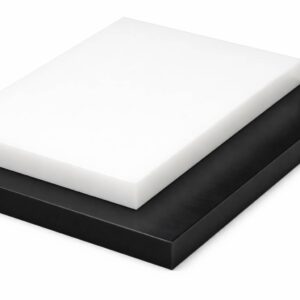
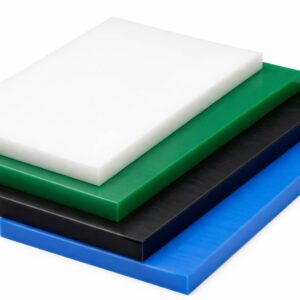
HDPE Sheet
$52.00 – $6,076.00Price range: $52.00 through $6,076.00 Select options This product has multiple variants. The options may be chosen on the product page -
UHMWPE Sheet
$402.93 – $4,757.72Price range: $402.93 through $4,757.72 Select options This product has multiple variants. The options may be chosen on the product page -
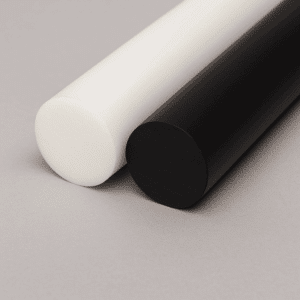
HDPE Rod – Black & Natural
$5.89 – $2,215.31Price range: $5.89 through $2,215.31 Select options This product has multiple variants. The options may be chosen on the product page
Environmental & Performance Requirements
Light & Optical Performance
High light transmission
Light diffusion capability
Resistance to yellowing
UV stability over extended exposure
Mechanical
Impact resistance (hail, tools, debris)
Strength between support members
Resistance to cracking at fixing points
Structural stability under wind loads
Greenhouse panels must perform consistently under cyclical thermal expansion and moisture exposure.
Recommended Materials
Polycarbonate (Solid)
High impact resistance
Suitable for exposed roof sections
Good UV-stable grades available
Multiwall Polycarbonate
Lightweight
Improved insulation properties
Commonly used for greenhouse roofing
Acrylic (PMMA)
High optical clarity
UV stable
Suitable for side panels where impact risk is moderate
Fabrication & Processing
Greenhouse panels and components are manufactured using:
CNC routing for accurate panel sizing
Controlled drilling for expansion allowances
Thermal forming for curved roof sections
Plastic welding for fabricated internal systems
Bending for brackets and supports
Laser cutting may not be appropriate for thicker polycarbonate due to potential stress effects.
Production aligns with structural frame layouts and installation methods.
Structural & Installation Considerations
Before fabrication, documentation should define:
Frame spacing and support distance
Required panel thickness
Fixing method and expansion clearance
UV-protected surface orientation
Wind classification
Sealing and drainage strategy
Improper installation can lead to condensation ingress or stress cracking.
Alternative Options:
All components used in this application are manufactured in-house using controlled, drawing-led production processes. We do not supply generic or off-the-shelf products. Each part is produced to specification to meet defined mechanical, environmental, and installation requirements.
Frequently Asked Questions
Multiwall polycarbonate is commonly used due to its insulation properties and light transmission.
Polycarbonate offers higher impact resistance, making it suitable for hail-prone areas. Acrylic provides greater clarity but lower impact strength.
Service life depends on UV exposure and material grade. UV-stabilised sheets are designed for extended outdoor performance.
Yes. Thermal expansion must be accommodated during installation to prevent cracking.
Yes, subject to material type and bending radius.
Material selection should consider chemical exposure. HDPE and polypropylene are often used for chemical-resistant internal components.