
Perspex Online

Industrial Engineering Wear Components1 | Perspex Online

Overview

Truck liners are custom-manufactured plastic panels designed to protect load beds, internal cargo areas, side walls, and flooring surfaces in commercial trucks and transport vehicles. These liners act as a sacrificial wear layer, preventing structural damage to the underlying metal bodywork.

Unlike drop-in retail bed liners, this application focuses on fabricated plastic components produced to drawing. Panels are CNC machined and supplied to suit specific vehicle makes, body configurations, and commercial transport requirements.

Where It’s Used

  • Rigid body trucks

  • Tipper trucks

  • Utility vehicles (utes)

  • Tray-back trucks

  • Service bodies

  • Fleet logistics vehicles

  • Mining and site transport trucks


Truck liners may be installed in full-bed configurations or as modular protective sections depending on duty classification.

Industrial Engineering Wear Components | Perspex Online
Truck liners | Perspex Online

Why Plastic Is Used

Plastic liners are widely specified because they:

  • Reduce abrasion against painted or galvanised steel

  • Absorb impact from shifting loads

  • Resist moisture and chemical exposure

  • Reduce noise from load movement

  • Offer lighter weight than steel wear plates

  • Can be replaced without structural modification


Material selection is performance-driven, based on load type and operational environment.

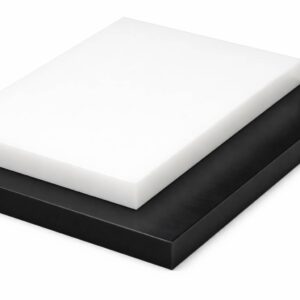
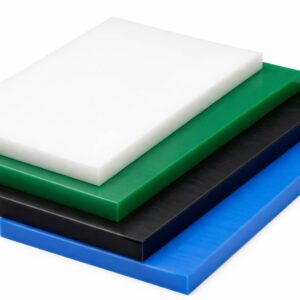
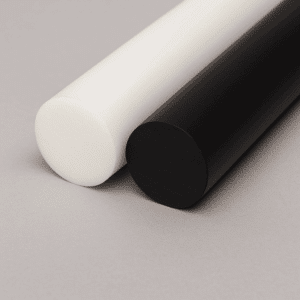
Recommended Materials for Wear Strips

Custom Manufactured to Your Drawings

Truck liners are produced to suit vehicle-specific geometry and load requirements.

We manufacture from:

  • Supplied CAD files (DXF, DWG, STEP)

  • Detailed fabrication drawings

  • Vehicle measurements

  • Existing liner samples

Production capability includes:

  • One-off liners for specialist builds

  • Batch production for fleet rollouts

  • Repeat manufacturing to controlled drawings

All liners are CNC machined in-house to ensure dimensional accuracy, repeatability, and consistency across installations. We do not resell moulded retail liners; components are fabricated to specification.

Popular Truck Liners

Typical Applications

  • Full truck bed liners

  • Side wall impact panels

  • Floor wear sheets

  • Tailgate liners

  • Tipper body sacrificial liners

  • Tool compartment protection panels

  • Refrigerated truck floor protection

  • Heavy-duty mining transport liners

Key Performance Requirements

  • High abrasion resistance

  • Impact resistance from dropped loads

  • Resistance to gouging and scoring

  • Load distribution capability

  • Dimensional stability under weight

  • Resistance to cracking around fasteners

Manufacturing & Fabrication

Truck liners are typically manufactured using:

  • CNC routing for profile cutting

  • Precision drilling and slotting

  • Countersinking where required

  • Machined recesses for tie-down clearance

  • Modular panel fabrication for large bodies


For tipper or curved bodies, heat forming may be used where geometry requires it. Material bend limits must be considered to prevent stress whitening or distortion.

Design & Installation Considerations

  • Confirm load type (bulk material vs palletised goods)

  • Allow for thermal movement in large panels

  • Avoid sharp internal corners

  • Consider replaceable wear strips in high-contact zones

  • Specify fixing spacing based on load distribution

  • Account for water drainage and debris clearance


For high-impact areas, reinforced sections or thicker wear zones may be required.

truck liners1 | Perspex Online

Alternative Options:

All components used in this application are manufactured in-house using controlled, drawing-led production processes. We do not supply generic or off-the-shelf products. Each part is produced to specification to meet defined mechanical, environmental, and installation requirements.

Frequently Asked Questions

What thickness is recommended for truck liners? +

Thickness depends on load type. Light commercial use may use 6–10mm, while heavy-duty or mining environments may require 12–20mm or greater.

Is UHMWPE better than HDPE for liners? +

UHMWPE offers superior abrasion resistance and lower friction, making it suitable for sliding bulk loads.

Can liners be supplied in sections? +

Yes. Modular panel systems are commonly used for large bodies or confined installation areas.

Are liners structural? +

Truck liners are generally protective wear layers and not primary structural components.

Can you produce liners for older or discontinued truck models? +

Yes, subject to measurement or sample availability.

Do liners reduce load noise? +

Yes. Plastic liners can reduce vibration and noise compared to bare steel surfaces.

Send Us Your Drawing

Selecting the correct material and fabrication approach for automotive and fleet applications requires consideration of load type, environment, installation method, and service life expectations.