

Acrylic Display Cabinets
Overview
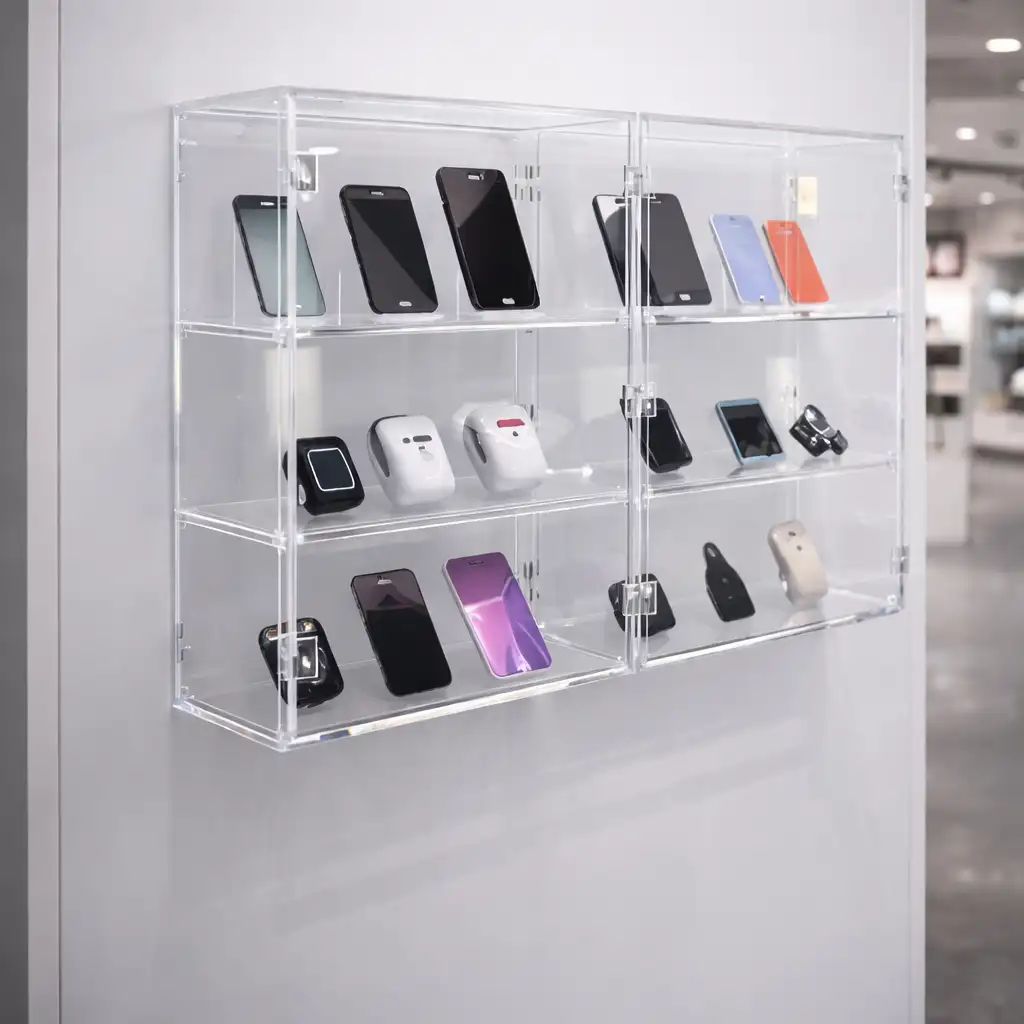
Acrylic display cabinets are transparent enclosures used to protect and showcase products, artefacts, or merchandise while maintaining full visibility. These cabinets are typically fabricated from clear acrylic panels and assembled into box-style or framed structures designed for countertop, wall-mounted, or freestanding display.
Common environments include:
Retail stores and showrooms
Museums and galleries
Exhibition and trade show displays
Corporate reception areas
Collectible and product display installations
Plastic materials, particularly acrylic, are commonly used for display cabinets because they offer high optical clarity, lower weight than glass, and flexibility in custom fabrication. Acrylic can be machined, bonded, and polished to create clean, transparent enclosures suitable for commercial display environments.
Custom Manufactured to Your Drawings
Most acrylic display cabinets are produced to specific dimensions and design requirements based on the item being displayed and the installation environment.
We manufacture display cabinet components based on customer drawings, CAD files, sketches, or physical samples.
Typical production capabilities include:
Accepting CAD drawings or design files
Manufacturing from technical sketches or reference samples
Prototype and one-off cabinets for exhibitions or retail displays
Repeat production runs for multi-store installations
In-house machining and fabrication
Because cabinet size, mounting method, and access requirements vary widely, display cabinets are typically drawing-led custom fabrications rather than standard products.
Typical Applications
Acrylic display cabinets are commonly used for:
Retail product protection displays
Jewellery and watch display cases
Electronics and technology product displays
Museum and gallery artefact protection
Collectible or memorabilia display cabinets
Exhibition and trade show display enclosures
Countertop retail product protection boxes
Corporate reception or brand display cases
These cabinets are designed to balance visibility, protection, and integration with existing display fixtures.
Recommended Materials for Acrylic Display Cabinets
Popular Acrylic Display Cabinets
-
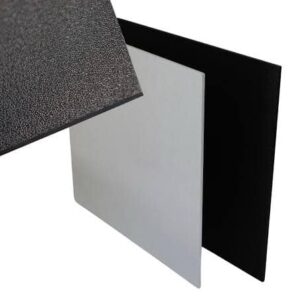
ABS Plastic Sheet
$113.54 – $340.00Price range: $113.54 through $340.00 Select options This product has multiple variants. The options may be chosen on the product page -
Acrylic Sheet (Perspex)
$60.00 – $2,672.40Price range: $60.00 through $2,672.40 Select options This product has multiple variants. The options may be chosen on the product page -
Polycarbonate Sheet (UV Resistant)
$101.20 – $3,396.60Price range: $101.20 through $3,396.60 Select options This product has multiple variants. The options may be chosen on the product page -
Rigid PVC Sheet
$40.43 – $962.50Price range: $40.43 through $962.50 Select options This product has multiple variants. The options may be chosen on the product page
Key Performance Requirements
Mechanical
Display cabinets must provide adequate structural stability while maintaining visual clarity.
Typical requirements include:
Panel rigidity to prevent flexing
Accurate bonding of cabinet joints
Scratch-resistant surfaces for long-term display quality
Smooth and polished edges for visible installations
Structural integrity for stacking or mounting
Environmental
Cabinets must maintain clarity and appearance over time.
Environmental considerations include:
Resistance to yellowing under indoor lighting
UV stability for window displays
Compatibility with regular cleaning
Protection against dust and handling
Material Selection Summary
For most display cabinet applications, acrylic is preferred due to its optical clarity and premium visual finish. Acrylic provides a glass-like appearance while remaining significantly lighter and easier to fabricate into custom cabinet panels.
Polycarbonate may be considered where impact resistance is required, particularly in public-access installations.
PETG can be used where curved or thermoformed cabinet components are required, although it typically does not provide the same scratch resistance as acrylic.
Material choice should consider cabinet size, visibility requirements, and exposure to impact or handling.
Recommended Materials
The most widely used material for display cabinets due to its excellent optical clarity and polished finish.
Advantages:
Glass-like transparency
Lightweight compared with glass
Easy to machine and bond
Limitations:
Lower impact resistance than polycarbonate
Design & Installation Considerations
When designing acrylic display cabinets, several factors should be considered:
Panel thickness relative to cabinet size
Access requirements (removable lid, hinged door, sliding panels)
Bonded vs mechanically assembled cabinet designs
Mounting or base integration
Ventilation requirements for electronic displays
Weight and handling during installation
Considering these design factors early helps ensure the cabinet performs effectively within its display environment.
Alternative Options:
All components used in this application are manufactured in-house using controlled, drawing-led production processes. We do not supply generic or off-the-shelf products. Each part is produced to specification to meet defined mechanical, environmental, and installation requirements.
Frequently Asked Questions
Common acrylic thicknesses range from 4 mm to 12 mm, depending on cabinet size and structural requirements.
Yes. Most cabinets are produced from CAD drawings, sketches, or reference samples to ensure precise dimensions.
Yes. Acrylic display cabinets are typically custom fabricated to suit the dimensions of the items being displayed.
Yes. Cabinets can be designed with hinged doors, removable lids, or sliding access panels depending on the application.
Acrylic is lighter and less prone to shattering than glass, though it can scratch more easily.
Yes. Acrylic cabinets are commonly used for temporary exhibition displays and trade show product protection.