
Perspex Online

Waste & Grey Water Tanks

Union | Perspex Online
Retail, Display & Visual Merchandising

Overview

Plastic materials are commonly used for wastewater storage tanks because they offer corrosion resistance, chemical compatibility, and long-term durability in wet environments. Unlike metal tanks, plastic tanks are not susceptible to rust and can withstand continuous exposure to moisture and cleaning chemicals.


Waste and grey water tanks are commonly used in:

  • Commercial buildings and facilities

  • Recreational vehicles and marine systems

  • Off-grid sanitation systems

  • Industrial wastewater management

  • Food processing and washdown areas

  • Portable sanitation and service vehicles


Because tank sizes, capacities, and installation environments vary widely, these tanks are often custom manufactured to match specific fluid storage requirements and available installation space.

Custom Manufactured to Your Drawings

Waste and grey water tanks are typically produced according to specific capacity requirements and installation layouts.


We manufacture tank components based on:

  • CAD drawings and dimensional specifications

  • Customer sketches or installation measurements

  • Reference samples or existing tank designs

  • Prototype tanks for new installations

  • Repeat production runs for commercial or industrial systems


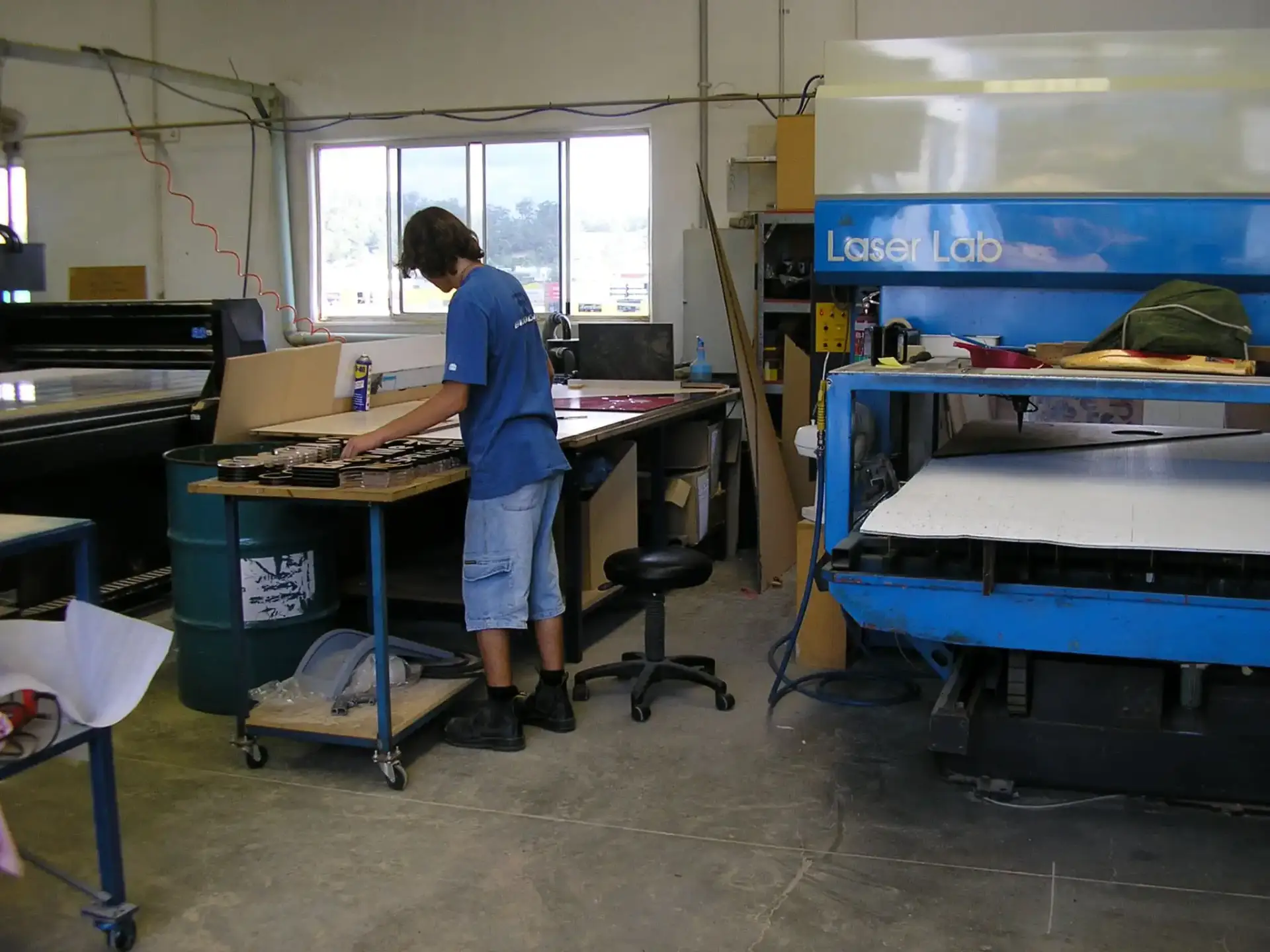
All components are fabricated in-house using plastic machining, forming, and welding processes. Pipe connections, access openings, and mounting features are produced according to the supplied specifications.


Because wastewater systems must often integrate with existing plumbing and fluid management systems, most tanks are drawing-led custom fabrications rather than standardised products.

Ute Tray Sliders | Perspex Online
P1010009 | Perspex Online

Typical Applications

Waste and grey water tanks are used in a wide range of fluid management systems, including:

  • Grey water storage tanks for buildings

  • Wastewater holding tanks for mobile systems

  • Industrial washdown wastewater tanks

  • Recreational vehicle grey water tanks

  • Marine sanitation holding tanks

  • Portable sanitation systems

  • Agricultural wastewater collection tanks

  • Process wastewater containment tanks


These tanks allow wastewater to be collected, contained, and managed before treatment or disposal.

Recommended Materials for Waste & Grey Water Tanks

Popular Waste & Grey Water Tanks

Key Performance Requirements

Mechanical

Wastewater tanks must provide structural strength and leak prevention under continuous fluid loads.


Typical mechanical considerations include:

  • Tank wall thickness to support fluid weight

  • Structural reinforcement for larger tanks

  • Secure mounting of pipe fittings and outlets

  • Dimensional stability during long-term use

  • Resistance to cracking or deformation


Environmental

Wastewater storage systems are exposed to moisture, chemicals, and environmental conditions.

Environmental considerations include:

  • Resistance to corrosion and moisture exposure

  • Compatibility with cleaning and sanitation chemicals

  • Temperature stability in varying environments

  • Odour containment and venting compatibility

Recommended Materials

HDPE (High-Density Polyethylene)

A widely used material for wastewater tanks due to its excellent chemical resistance and durability.


Advantages:

  • Resistant to many wastewater contaminants

  • Good impact resistance

  • Suitable for large tank structures

Limitations:

  • Limited resistance to certain solvents


Polypropylene (PP)

Often used in environments requiring improved temperature resistance.


Advantages:

  • Good resistance to chemicals and detergents

  • Higher temperature tolerance than HDPE

Limitations:

  • Slightly lower impact resistance compared with HDPE

Material Selection Summary

For most wastewater storage applications, HDPE is commonly used due to its strong resistance to moisture and chemical exposure.


Polypropylene may be selected when higher operating temperatures or specific chemical compatibility requirements are involved.


PVC may be used in smaller fluid containment systems or lower temperature environments.


Material selection should consider fluid composition, operating temperature, and installation conditions.

Design & Installation Considerations

Several factors should be considered when designing wastewater storage tanks:

  • Required storage capacity

  • Fluid composition and contamination levels

  • Pipe connections and drainage systems

  • Venting for pressure and odour control

  • Structural supports and installation space

  • Access for inspection and maintenance


Proper design ensures the tank functions reliably within the wastewater management system.

Industrial Engineering Wear Components1 | Perspex Online

Alternative Options:

All components used in this application are manufactured in-house using controlled, drawing-led production processes. We do not supply generic or off-the-shelf products. Each part is produced to specification to meet defined mechanical, environmental, and installation requirements.

Frequently Asked Questions

What materials are commonly used for waste and grey water tanks? +

Common materials include HDPE, polypropylene, and PVC, depending on chemical exposure and installation conditions.

Can wastewater tanks be manufactured to custom sizes? +

Yes. Most tanks are custom fabricated to match capacity requirements and available installation space.

Can tanks include pipe connections and fittings? +

Yes. Tanks can be fabricated with machined openings, threaded fittings, or welded pipe connections.

Are plastic tanks suitable for wastewater applications? +

Yes. Plastic materials provide corrosion resistance and long-term durability in wet environments.

Can tanks be used in mobile systems such as vehicles or marine applications? +

Yes. Wastewater tanks are commonly used in recreational vehicles, boats, and portable sanitation systems.

Are inspection openings possible? +

Yes. Tanks can include access ports or removable covers for inspection and cleaning.

Send Us Your Drawing

Selecting the correct material and fabrication approach for automotive and fleet applications requires consideration of load type, environment, installation method, and service life expectations.