Safety, Protection & Compliance

Overview
This category covers a range of protective and safety-focused plastic components including machine guards, protective shields, safety barriers, and containment panels used across industrial, commercial, and public-facing environments.
Industries commonly served include:
- Manufacturing and industrial facilities
- Food processing environments
- Warehousing and logistics operations
- Laboratories and healthcare facilities
- Commercial buildings and public infrastructure
- Retail and service environments
Typical Requirements
- Impact resistance for personnel protection
- Optical clarity where visibility is required
- Abrasion resistance in high-use environments
- Chemical compatibility with cleaning agents or industrial fluids
- UV stability for outdoor or light-exposed installations
- Flame resistance in certain regulated environments
- Structural stability for barrier or guard applications
- Electrical insulation properties where relevant
Applications in This Category
-
Machine Guards
Transparent or opaque protective panels used to shield operators from moving machinery while allowing visibility of equipment. -
Safety Shields
Protective panels used to separate personnel from potential hazards such as splashes, debris, or equipment operation zones. -
Protective Barriers
Physical barriers used to control access to hazardous areas or protect equipment from accidental contact. -
Hygiene Screens
Transparent panels used in environments requiring separation between personnel while maintaining communication and visibility. -
Dust Covers
Protective enclosures used to shield equipment or displays from contamination or airborne debris.
Material Selection Overview
- HDPE – General-purpose use, chemical resistance, impact tolerance
- Polycarbonate – High impact resistance with transparency
- Acrylic (PMMA) – Optical clarity where high impact is not critical
- UHMWPE – Low friction and high abrasion resistance
- ABS – Good rigidity and surface finish for interior components
- PVC (Rigid) – Chemical resistance and fabrication versatility
When Custom Fabrication Is Required
Many safety and protection components are produced to specific dimensions or machine layouts. Guarding panels, barriers, and shields often need to integrate with existing equipment, structures, or safety systems.
As a result, many components are drawing-led and require custom machining or fabrication to achieve the correct dimensions, mounting features, and clearances.
Processes such as CNC machining, precision cutting, forming, or assembly are commonly used to produce these parts.
Why Plastics Are Used in Safety Applications
- High impact resistance without the brittleness of glass
- Transparency for visibility of machinery or processes
- Lightweight structures that simplify installation
- Resistance to corrosion in humid or chemical environments
Visibility and Safety Monitoring
In many safety applications, maintaining visibility of equipment or processes is essential. Operators must be able to monitor machinery while remaining physically separated from moving parts or hazardous zones.
Transparent plastics such as acrylic or polycarbonate allow protective barriers to be installed without obstructing the operator’s view. This is particularly important in environments such as:
- Machine guarding systems
- Laboratory protection screens
- Process monitoring enclosures
- Equipment safety covers
Compliance With Workplace Safety Standards
- Machine guarding safety requirements
- Workplace health and safety standards
- Hygiene or contamination control regulations
- Industrial risk management procedures
Protection of Personnel and Equipment
- Prevent operator access to moving machinery
- Shield workers from flying debris or splashes
- Protect instrumentation from accidental damage
- Separate pedestrian areas from equipment zones
Durability in Industrial Environments
- Resistance to abrasion or scratching
- Stability under industrial lighting conditions
- Chemical resistance to cleaning agents or industrial fluids
- Long-term dimensional stability
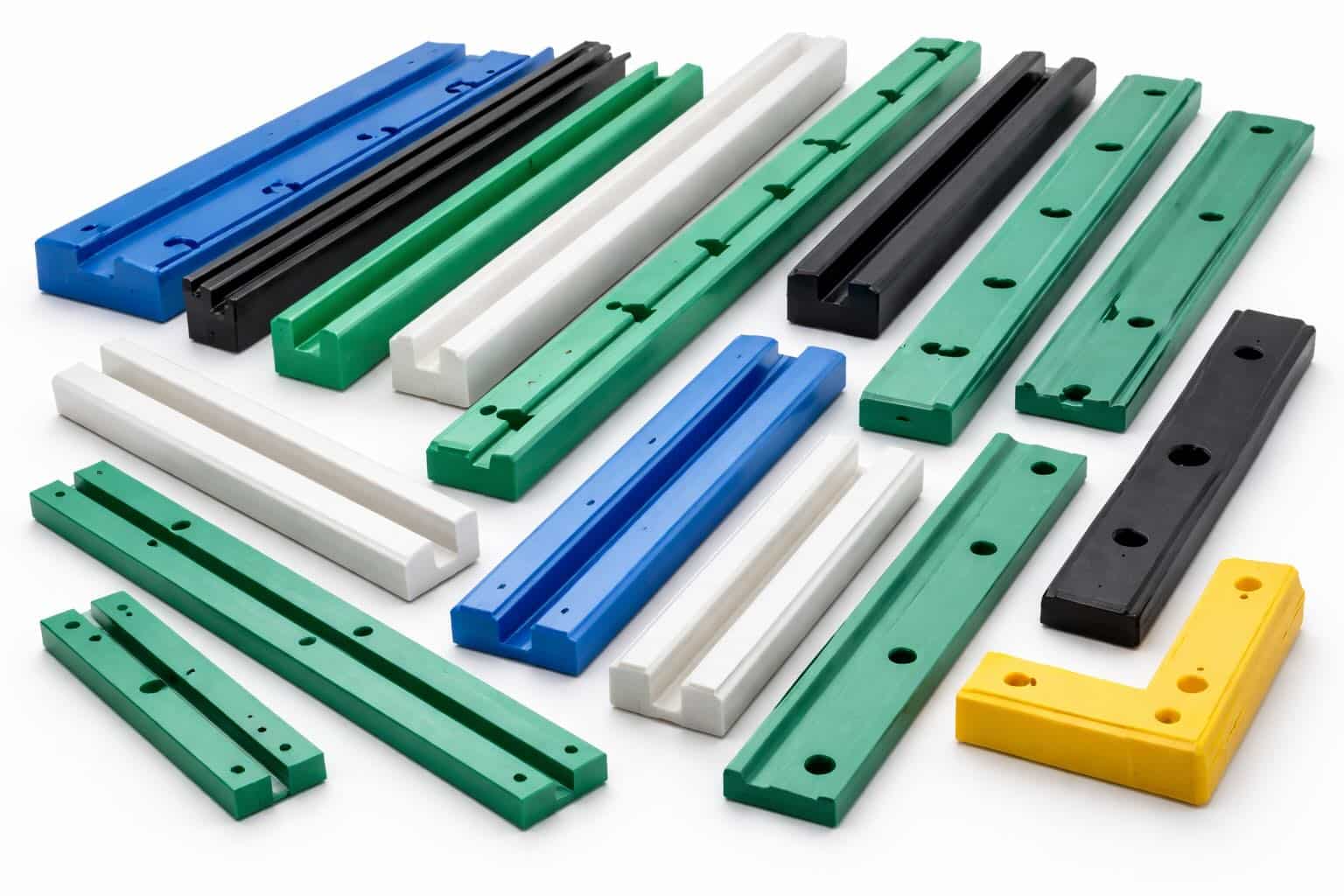
Alternative Options:
All components used in this application are manufactured in-house using controlled, drawing-led production processes. We do not supply generic or off-the-shelf products. Each part is produced to specification to meet defined mechanical, environmental, and installation requirements.
- Industrial, Engineering & Wear Components
- Industrial Wear Strips
- Machine Guards
- Conveyor Belt Plastics-old
- Bearings, Rollers & Sliding Components
- Custom Plastic Tanks
- Conveyor Belt Plastics
- Marine Plastic Tanks
- Vehicle-Mounted Plastic Tanks
- Automotive, Transport & Fleet
- Building, Construction & Infrastructure
- Energy, Data & Technical Enclosures
- Food, Health & Medical
- Home, Leisure & Custom Projects
- Retail, Display & Visual Merchandising
- Tanks, Fluid & Containment Systems