
Solar Battery Covers | Perspex Online

Perspex Online

Solar Battery Covers

Union | Perspex Online
solar 1 | Perspex Online

Overview

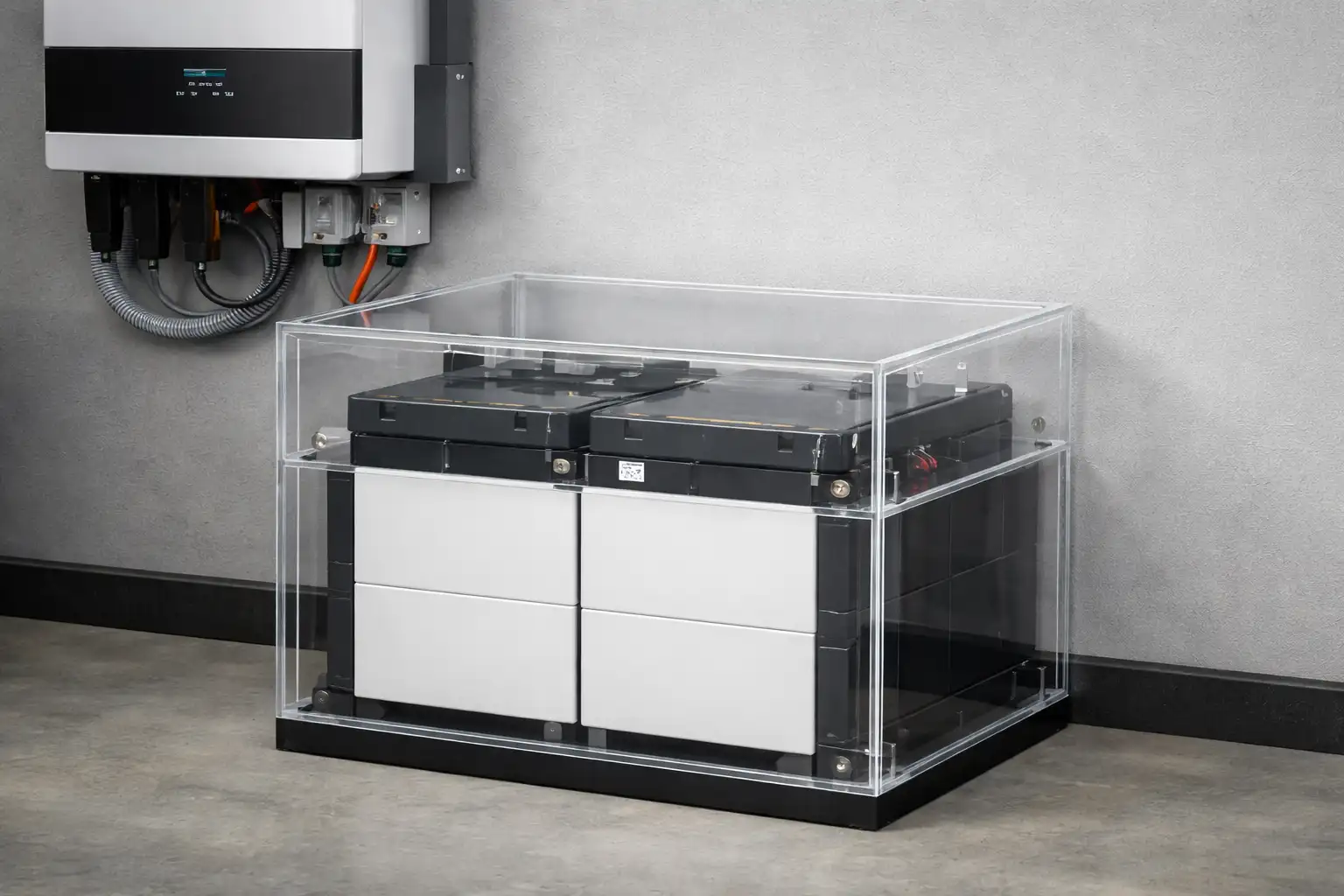
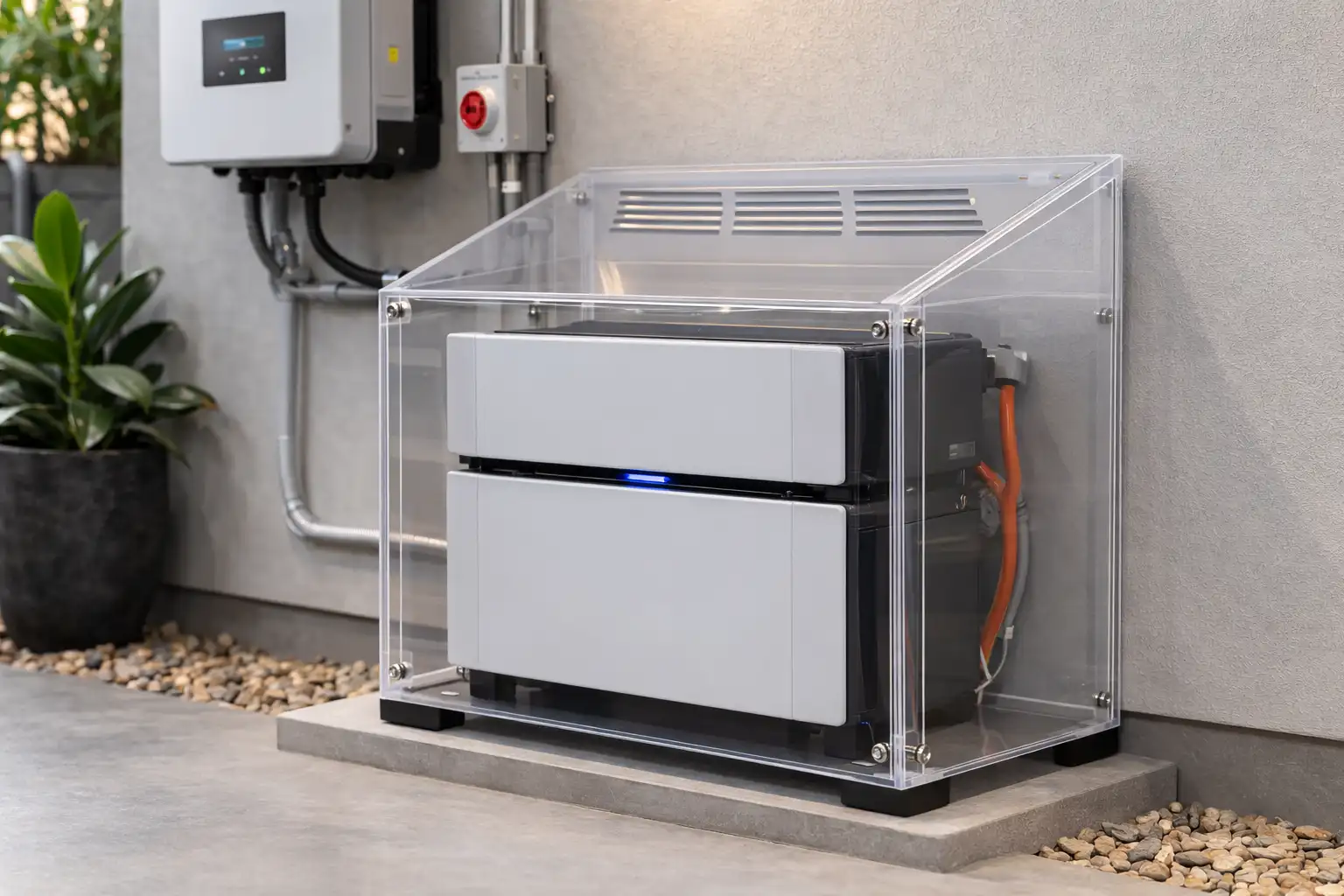
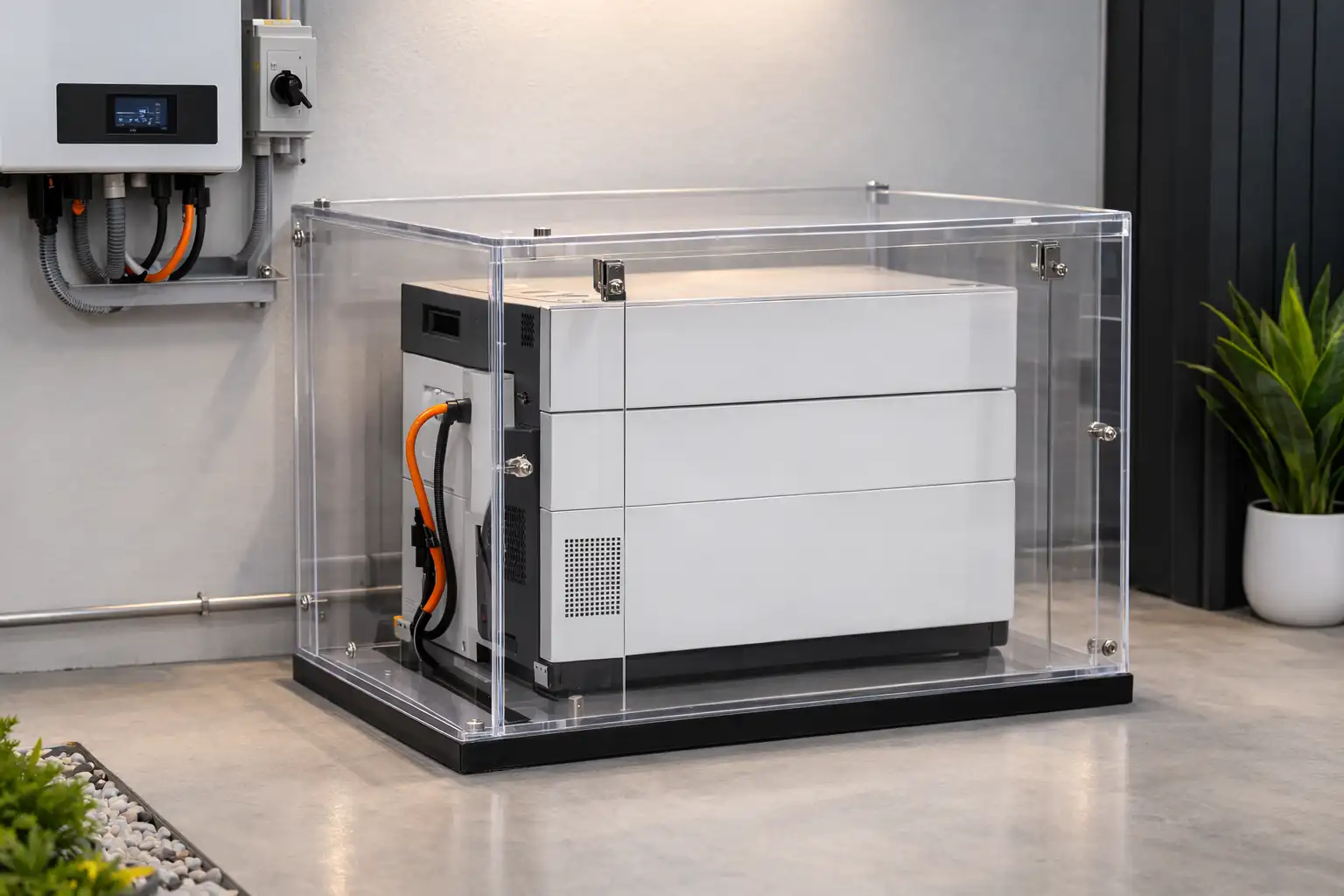
Solar battery covers are protective housings designed to shield battery storage systems used in solar power installations. These covers protect batteries and associated electrical components from environmental exposure, accidental contact and mechanical damage while allowing safe operation and maintenance access.
They are commonly used in residential solar installations, commercial solar arrays, energy storage systems and off-grid renewable power setups. In many cases, battery systems are installed in outdoor environments, plant rooms or technical enclosures where protective covers help maintain system safety and durability.

Custom Manufactured to Your Drawings

Solar battery covers are typically produced to match the dimensions and layout of the battery systems they protect.

We manufacture plastic components to customer drawings and specifications, supporting projects that require precise dimensions, mounting features and ventilation cut-outs.

Our manufacturing process can accommodate:

  • CAD drawings and technical design files

  • Hand sketches or dimensional layouts

  • Existing parts or samples for replication

  • One-off prototypes and small production runs

  • Repeat production for ongoing installations

All fabrication is carried out in-house, allowing consistent quality control and accurate production of custom plastic components for solar infrastructure projects.

solar 3 | Perspex Online
solar 2 | Perspex Online

Typical Applications

Solar battery covers are used across a range of renewable energy and electrical infrastructure installations, including:

  • Solar energy storage battery housings

  • Protective covers for lithium battery banks

  • Enclosures for inverter and battery systems

  • Off-grid renewable energy installations

  • Commercial solar storage units

  • Outdoor battery protection for remote power systems

  • Equipment covers within solar plant rooms

  • Protective panels for energy storage cabinets

Recommended Materials for Bus Components & Parts

Popular Solar Battery Covers

Key Performance Requirements

Solar battery covers must meet several performance requirements to ensure safe and reliable operation.


Mechanical

  • Adequate rigidity to protect batteries from impact or accidental contact

  • Dimensional stability for mounting and enclosure alignment

  • Resistance to cracking or deformation over time

  • Secure fastening or mounting capability


Environmental

  • UV resistance for outdoor installations

  • Moisture and weather resistance

  • Corrosion resistance in coastal or industrial environments

  • Temperature tolerance for outdoor solar installations

Design & Installation Considerations

When designing solar battery covers, several factors should be considered to ensure effective performance and long service life.

  • Allow adequate ventilation to prevent battery overheating

  • Include access panels or removable sections for maintenance

  • Ensure compatibility with inverter and battery mounting systems

  • Consider UV-stable materials for outdoor installations

  • Provide sufficient clearance for cables, connectors and monitoring equipment

  • Use materials that provide electrical insulation where required


Proper design helps ensure that protective covers support safe and reliable operation of solar energy storage systems.

Functional Role in Solar Systems

Solar battery covers serve as both a protective barrier and a structural component within energy storage systems. They prevent accidental contact with live terminals, reduce exposure to environmental factors such as dust, moisture, and UV radiation, and help maintain the longevity of battery systems.


By integrating covers into solar installations, operators can improve system safety, streamline maintenance procedures, and enhance overall energy storage reliability.

Lifecycle & Maintenance Considerations

Battery covers are expected to perform over extended operational lifespans:

  • Materials must resist cracking or warping due to UV, heat, or chemical exposure

  • Smooth surfaces facilitate easy cleaning and maintenance

  • Modular or removable sections reduce downtime during service or battery replacement

  • Long-term performance depends on material choice, thickness, and fabrication accuracy

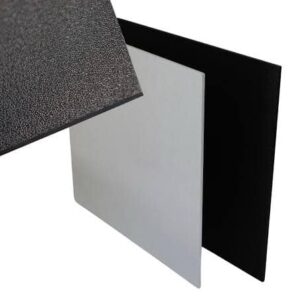
solar 1 | Perspex Online

Alternative Options:

All components used in this application are manufactured in-house using controlled, drawing-led production processes. We do not supply generic or off-the-shelf products. Each part is produced to specification to meet defined mechanical, environmental, and installation requirements.

Frequently Asked Questions

What materials are best for solar battery covers? +

Polycarbonate, HDPE and PVC are commonly used depending on impact resistance, environmental exposure and electrical insulation requirements.

Can solar battery covers be manufactured to custom sizes? +

Yes. Most covers are produced to match the dimensions and layout of specific battery systems and installation environments.

Do you manufacture from customer drawings? +

Yes. Production is typically drawing-led and we accept CAD files, sketches and samples.

What thickness of plastic is typically used? +

Thickness depends on structural requirements and installation conditions. Many protective panels range from 3 mm to 10 mm, but thicker materials may be required for structural housings.

Are plastic covers suitable for outdoor solar installations? +

Yes, provided UV-stable materials such as polycarbonate or suitable grades of HDPE are selected.

Can ventilation openings be included in the design? +

Yes. CNC machining allows ventilation slots, access holes and cable openings to be incorporated into the design.

Send Us Your Drawing

Selecting the correct material and fabrication approach for automotive and fleet applications requires consideration of load type, environment, installation method, and service life expectations.