
Food Cutting Boards | Perspex Online

Perspex Online

Food Cutting Boards

Union | Perspex Online
food cutting | Perspex Online

Overview

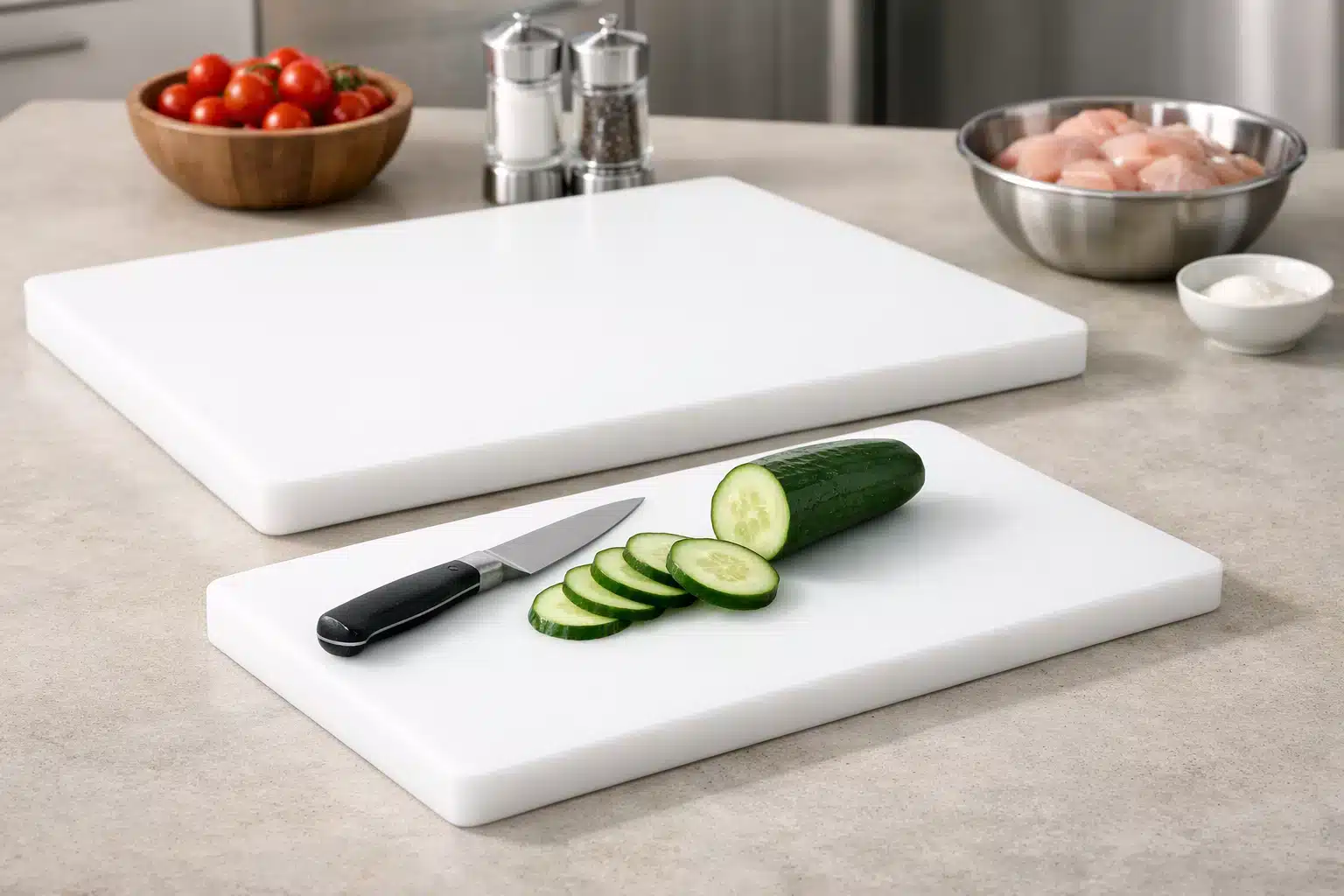
Food cutting boards are essential surfaces used in food preparation environments where hygiene, durability, and ease of cleaning are critical. In commercial kitchens, food processing plants, and packaging facilities, cutting boards must withstand frequent use, repeated cleaning cycles, and contact with various food products.
Plastic cutting boards are widely used because they provide a hygienic, non-porous surface that resists moisture absorption and bacterial growth when properly maintained. Unlike wood, engineered plastics can be manufactured with consistent thickness, smooth surfaces, and precise dimensions suitable for demanding commercial environments.

What It Is

A food cutting board is a flat, durable surface used for slicing, trimming, and preparing food products. In professional food environments, these boards must support safe food handling practices while maintaining structural integrity under repeated cutting and cleaning.


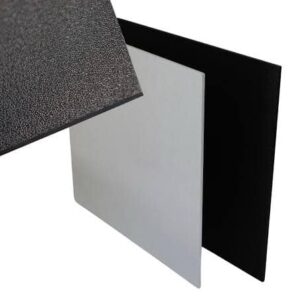
Plastic cutting boards are commonly fabricated from food-safe engineering plastics that provide good knife resistance, chemical durability, and moisture resistance. Boards may include features such as routed edges, juice channels, corner radii, or mounting holes depending on the intended installation.


Because preparation areas vary significantly across commercial kitchens and processing facilities, cutting boards are frequently manufactured to customer specifications rather than standard retail sizes.

Food cutting 2 | Perspex Online
food cut | Perspex Online

Where It’s Used

Food cutting boards are used across a wide range of food preparation and processing environments where hygiene and durability are essential.


Typical environments include:

  • Commercial kitchens

  • Food processing plants

  • Butcher shops and meat processing facilities

  • Catering operations

  • Food packaging lines

  • Bakery preparation areas

  • Institutional kitchens (schools, hospitals)

  • Seafood and poultry processing stations


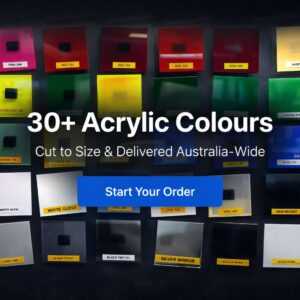
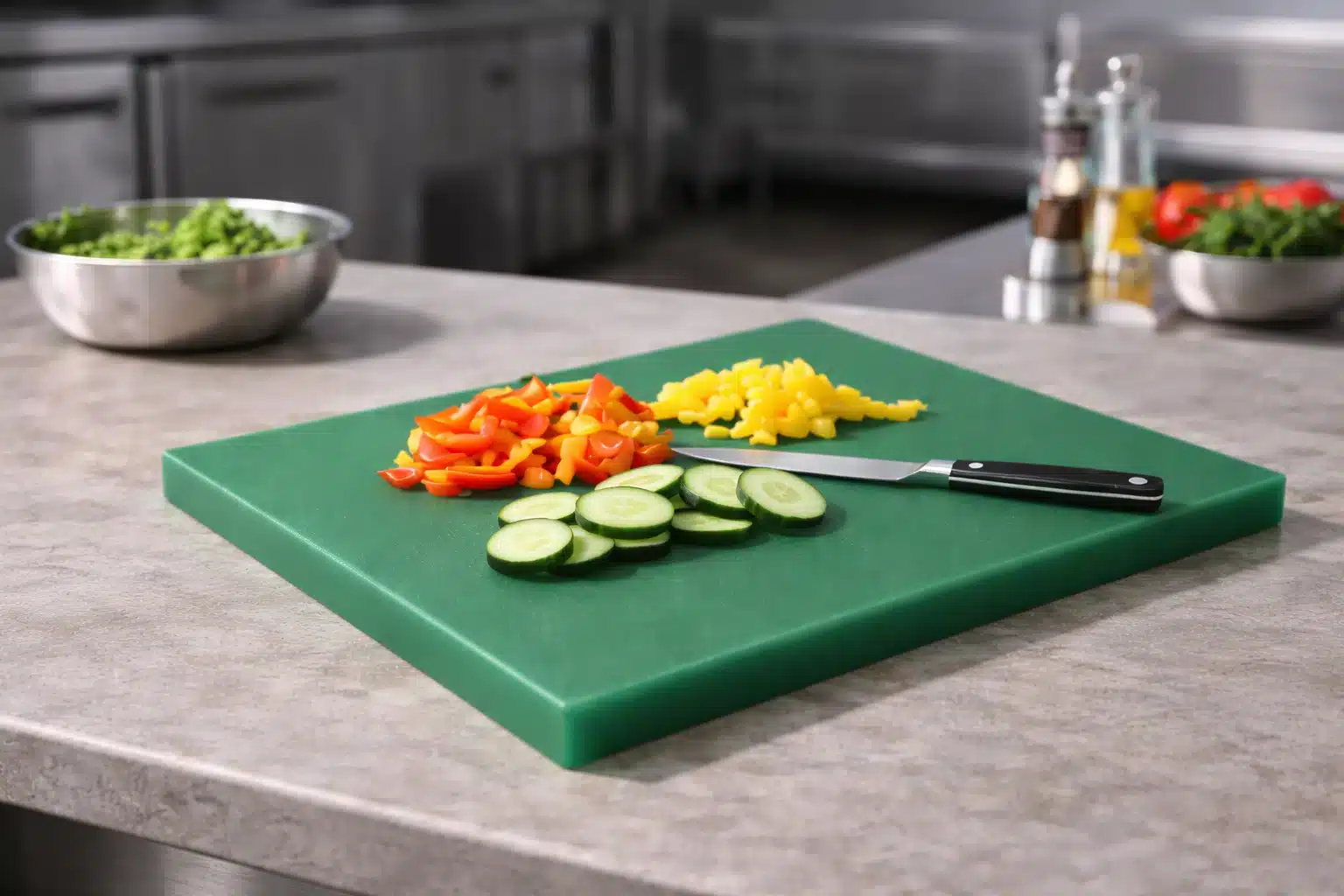
In many operations, colour-coded cutting boards are used to separate different food groups and reduce cross-contamination risks.

Recommended Materials for Food Cutting Boards

Popular Food Cutting Boards

Why Plastic Is Used

Plastic materials are commonly used for food cutting boards because they combine hygiene, durability, and ease of fabrication.

Key advantages include:

  • Non-porous surfaces that resist moisture absorption

  • Easy cleaning and sanitisation

  • Resistance to food acids and cleaning chemicals

  • Consistent thickness and dimensional stability

  • Good impact resistance and toughness

  • Lightweight compared with stone or metal surfaces

Engineering plastics also allow boards to be fabricated to precise dimensions and integrated into food preparation workstations.

Custom Manufactured to Your Drawings

Cutting boards for commercial environments are often produced to match specific workstations, preparation tables, or processing equipment.


Custom fabrication allows buyers to specify:

  • Exact dimensions and thickness

  • Cut-outs or recesses for equipment

  • Rounded corners and edge finishing

  • Drainage channels or juice grooves

  • Mounting holes or fixing points


Manufacturers can work from CAD files, technical drawings, or existing samples.

Key Performance Requirements

Mechanical

Food cutting boards must withstand repeated cutting, chopping, and scraping without excessive wear.


Important mechanical characteristics include:

  • Good impact resistance

  • Knife resistance and durability

  • Adequate stiffness to prevent flexing

  • Resistance to cracking or splitting


Environmental

Cutting boards operate in environments where moisture, food acids, and cleaning chemicals are common.


Required properties often include:

  • Moisture resistance

  • Chemical resistance to cleaning agents

  • Stability across typical kitchen temperature ranges

  • Resistance to staining and odour absorption

Design & Installation Considerations

When specifying custom cutting boards, several design factors should be considered.


Important considerations include:

  • Appropriate thickness for the expected cutting load

  • Board dimensions relative to preparation workspace

  • Surface finish and edge treatment

  • Cleaning and sanitisation requirements

  • Storage and handling arrangements


In high-use environments, removable boards can simplify cleaning and replacement.

Food cutting 2 | Perspex Online

Alternative Options:

All components used in this application are manufactured in-house using controlled, drawing-led production processes. We do not supply generic or off-the-shelf products. Each part is produced to specification to meet defined mechanical, environmental, and installation requirements.

Frequently Asked Questions

What thickness is typically used for plastic cutting boards? +

Common thicknesses range from 12 mm to 25 mm depending on the size of the board and the expected cutting load.

Are plastic cutting boards suitable for commercial kitchens? +

Yes. Materials such as HDPE are widely used in commercial food preparation environments due to their hygiene and durability.

Can cutting boards be manufactured to custom sizes? +

Yes. Boards can be fabricated to specific dimensions based on customer drawings or workspace requirements.

Can colour-coded cutting boards be produced? +

Yes. Plastic sheets are available in various colours to support food safety protocols.

Do plastic cutting boards absorb moisture? +

Engineering plastics used for cutting boards are non-porous and resistant to moisture absorption.

How durable are plastic cutting boards? +

Durability depends on the material and thickness. HDPE and UHMWPE provide good wear resistance for repeated use.

Send Us Your Drawing

Selecting the correct material and fabrication approach for automotive and fleet applications requires consideration of load type, environment, installation method, and service life expectations.