
Protective Medical Screens
Overview
Protective medical screens are transparent or semi-transparent barriers used in healthcare environments to provide separation between patients, healthcare staff, and equipment. These screens help reduce direct exposure to droplets, splashes, and contaminants while maintaining visibility and accessibility during medical procedures or patient interaction.
Purpose in Healthcare Environments
Protective medical screens create a physical barrier that helps limit the spread of airborne droplets and surface contamination in environments where close interaction between patients and medical staff is common.
They are commonly installed in:
Patient reception and registration counters
Clinical consultation rooms
Pharmacy counters
Laboratory workstations
Testing and diagnostic stations
Medical triage areas
These screens provide protection while still allowing clear communication and visual contact between healthcare professionals and patients.
Why Plastic Is Used
Plastic materials are widely used for medical protective screens because they offer optical clarity, durability, and ease of fabrication.
Key advantages include:
High transparency for clear visibility
Good impact resistance for safety
Lightweight compared with glass
Resistance to cleaning chemicals and disinfectants
Ability to be cut and machined into custom shapes
Smooth surfaces suitable for hygienic environments
In healthcare settings where frequent cleaning and sanitation are required, plastics can provide reliable long-term performance.
Recommended Materials for Protective Medical Screens
Popular Protective Medical Screens
-
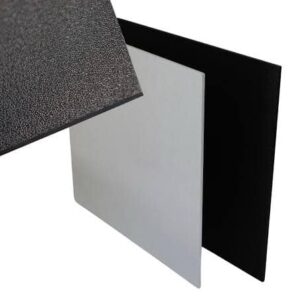
ABS Plastic Sheet
$113.54 – $340.00Price range: $113.54 through $340.00 Select options This product has multiple variants. The options may be chosen on the product page -
Acrylic Sheet (Perspex)
$60.00 – $2,358.00Price range: $60.00 through $2,358.00 Select options This product has multiple variants. The options may be chosen on the product page -
Polycarbonate Sheet (UV Resistant)
$101.20 – $2,541.50Price range: $101.20 through $2,541.50 Select options This product has multiple variants. The options may be chosen on the product page -
Rigid PVC Sheet
$40.43 – $2,177.60Price range: $40.43 through $2,177.60 Select options This product has multiple variants. The options may be chosen on the product page
Custom Manufactured to Your Drawings
Protective screens are often produced to suit specific counters, workstations, or equipment layouts. Custom manufacturing ensures screens fit accurately and function effectively within the intended environment.
Fabrication can be carried out using:
CAD drawings
Technical specifications
Site measurements
Existing sample components
Manufacturing capabilities typically include:
One-off prototype production
Small batch manufacturing
Repeat production runs
In-house machining and finishing
Custom screens may include cut-outs, mounting points, or integrated support structures depending on installation requirements.
Typical Applications
Protective medical screens are used in a wide range of healthcare and laboratory environments.
Common uses include:
Reception desk protective barriers
Pharmacy counter shields
Clinical consultation screens
Diagnostic testing station barriers
Laboratory bench splash screens
Patient triage station dividers
Medical equipment splash guards
Portable screening panels for temporary setups
These barriers support infection control while allowing normal clinical workflow.
Key Performance Requirements
Mechanical Requirements
Medical protective screens must provide adequate strength and durability in busy healthcare environments.
Important characteristics include:
Impact resistance
Structural rigidity for stability
Resistance to cracking or chipping
Secure mounting capability
Hygiene and Safety Considerations
In healthcare environments, protective screens must support infection control procedures.
Important design considerations include:
Smooth surfaces to minimise contamination retention
Minimal seams or joints where bacteria could accumulate
Easy removal for cleaning when required
Compatibility with standard disinfectants
Proper design helps ensure screens remain safe and hygienic during long-term use.
Alternative Options:
All components used in this application are manufactured in-house using controlled, drawing-led production processes. We do not supply generic or off-the-shelf products. Each part is produced to specification to meet defined mechanical, environmental, and installation requirements.
Frequently Asked Questions
Polycarbonate, acrylic, and PETG are commonly used due to their clarity and durability.
Yes. Many plastics provide good resistance to disinfectants and are easy to clean.
Yes. Screens are typically fabricated to match specific counters, desks, or equipment layouts.
Yes. Polycarbonate offers significantly higher impact resistance than acrylic.
Yes. CNC machining allows precise cut-outs or pass-through slots.
Yes. Large panels can be fabricated depending on material thickness and support requirements.