
Food, Health & Medical

Overview
The Food, Health & Medical category covers plastic components used in environments where hygiene, cleanliness, and material performance are critical. These applications are commonly found in food processing facilities, commercial kitchens, healthcare environments, laboratories, and pharmaceutical production.
In these industries, equipment and infrastructure must meet strict operational and sanitation requirements. Materials used in machine components, covers, panels, and guards must be easy to clean, resistant to chemicals and moisture, and capable of maintaining dimensional stability under repeated use and cleaning cycles.
Engineering plastics are widely used in these environments because they provide a combination of corrosion resistance, hygienic surfaces, and fabrication flexibility. Many plastics also offer good impact resistance and low moisture absorption, making them suitable for components exposed to frequent washdown procedures or chemical cleaning agents.
Typical Requirements
- Hygienic and easy-to-clean surfaces
- Resistance to cleaning chemicals and disinfectants
- Low moisture absorption
- Impact resistance for busy processing environments
- Smooth surfaces that minimise contamination build-up
- Temperature resistance for hot washdown or sterilisation processes
- Food-safe or medical-grade material compatibility where required
- Dimensional stability for precision equipment components
Applications in This Category
-
Food Processing Machine Components
Plastic guides, guards, panels, and machine parts used within food production equipment. These components must withstand frequent cleaning while maintaining hygienic surfaces. -
Commercial Kitchen Equipment Panels
Protective panels and covers used in catering equipment, food preparation stations, and kitchen machinery where durability and easy cleaning are important. -
Medical Equipment Covers
Protective housings and panels used on clinical equipment, diagnostic machines, and healthcare devices where cleanliness and durability are essential. -
Laboratory Equipment Panels
Custom panels and protective components used in laboratory workstations and testing equipment where chemical resistance and insulation may be required. -
Pharmaceutical Processing Components
Plastic components used within pharmaceutical production equipment, including machine guards, protective panels, and equipment covers.
Material Selection Overview
- HDPE – General-purpose use, chemical resistance, impact tolerance
- Polycarbonate – High impact resistance with transparency
- Acrylic (PMMA) – Optical clarity where high impact is not critical
- UHMWPE – Low friction and high abrasion resistance
- ABS – Good rigidity and surface finish for interior components
- PVC (Rigid) – Chemical resistance and fabrication versatility
When Custom Fabrication Is Required
Many components used in food, health, and medical environments are produced to specific equipment dimensions and layouts. Machine designs, mounting systems, and facility requirements often vary between installations.
As a result, plastic components in this category are frequently manufactured to customer drawings or technical specifications. Custom machining and fabrication allow panels, guards, and machine parts to fit precisely with existing equipment while maintaining hygienic design standards.
Hygiene-Critical Plastic Components
Food processing and medical environments require materials that support strict hygiene standards. Custom plastic components are widely used because they are non-porous, corrosion resistant, and easy to clean.
Fabricated plastic parts such as guards, trays, housings, and equipment covers can be produced from hygienic materials suitable for wash-down environments. Components can be designed to minimise dirt traps, support drainage, and withstand repeated cleaning cycles.
Typical materials used in hygienic environments include HDPE, polypropylene, PETG, and polycarbonate, depending on the chemical exposure, temperature range, and mechanical demands of the application.
Corrosion-Resistant Alternatives to Metal
Food production facilities, laboratories, and healthcare environments often operate in humid or chemically aggressive conditions. Traditional metal components can corrode over time, leading to contamination risks and maintenance issues.
Engineering plastics provide a durable alternative where corrosion resistance is essential. Custom fabricated plastic panels, guards, housings, and trays can replace metal components in many applications, improving longevity while reducing weight.
These materials are particularly useful in environments exposed to cleaning chemicals, moisture, or saline conditions commonly found in medical and food-processing settings.
Impact and Safety Considerations
Protective plastic components are commonly used around processing machinery, packaging lines, and laboratory equipment. Transparent plastics allow operators to monitor processes while maintaining physical protection.
Materials such as polycarbonate offer excellent impact resistance and are often chosen where durability and safety visibility are required. For applications where optical clarity is less critical, PETG or HDPE may provide more economical alternatives.
Design considerations often include rounded edges, reinforced mounting points, and compatibility with existing equipment frameworks.
Cleanroom-Compatible Fabrication
Medical device production, pharmaceutical processing, and laboratory environments often require materials suitable for controlled environments. Plastic fabrication allows for smooth surfaces and enclosed assemblies that support contamination control.
Where required, plastics can be selected for low particulate generation, chemical compatibility, and dimensional stability. Components can be designed to reduce crevices and support easy cleaning protocols.
Production Flexibility for Equipment Builders
Food processing and medical equipment manufacturers frequently require customised plastic components for new machines or replacement parts. Fabrication processes support both prototype development and ongoing production runs.
Manufacturing capabilities typically include:
- CNC machining of sheet plastics
- Plastic bending and forming
- Precision bonding and welding
- Custom cut panels and guards
- Assembly of fabricated structures
This approach allows equipment designers to provide drawings or CAD files and receive parts manufactured to specification.
Alternative Options:
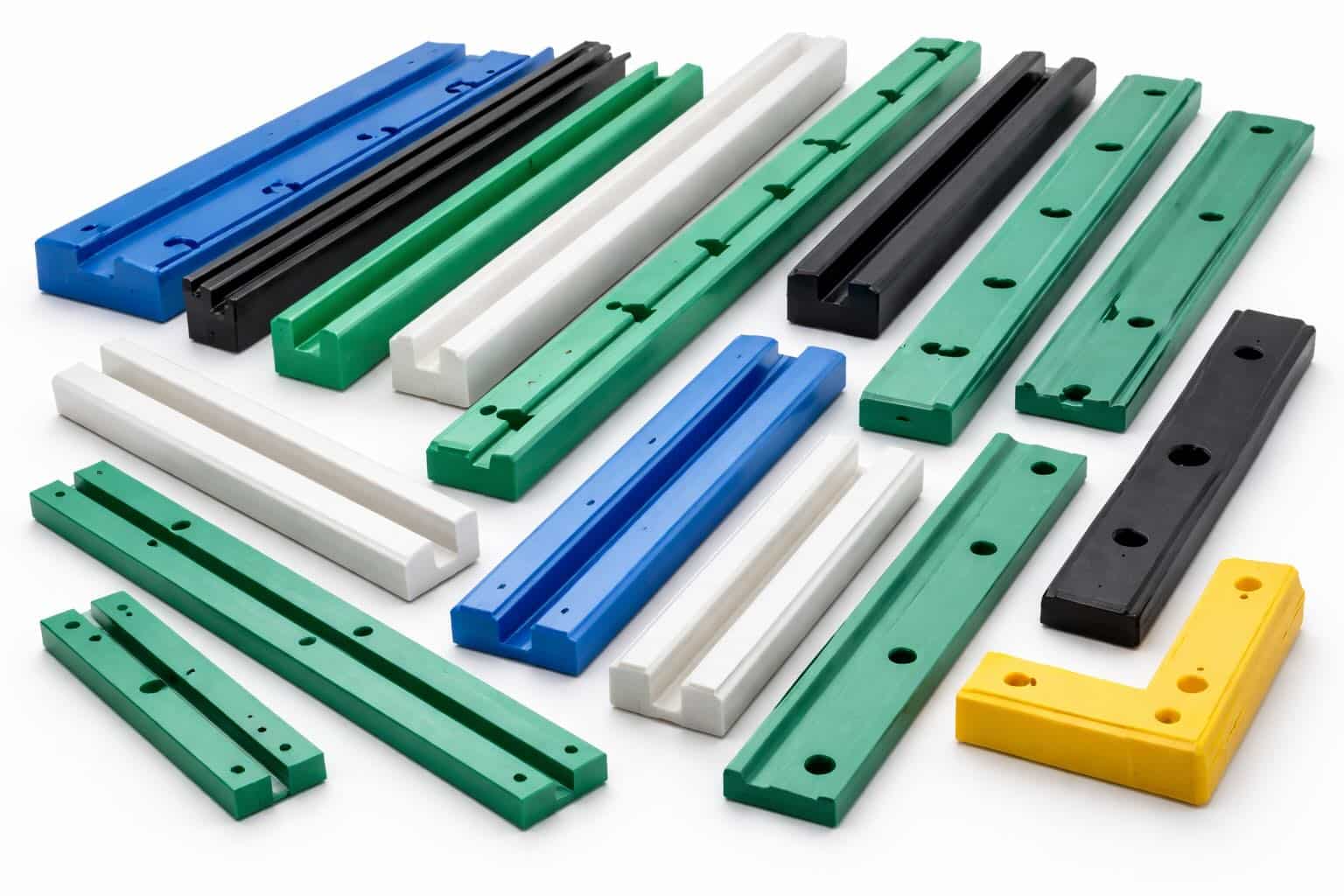
All components used in this application are manufactured in-house using controlled, drawing-led production processes. We do not supply generic or off-the-shelf products. Each part is produced to specification to meet defined mechanical, environmental, and installation requirements.
- Industrial, Engineering & Wear Components
- Conveyor Belt Plastics-old
- Automotive, Transport & Fleet
- Building, Construction & Infrastructure
- Energy, Data & Technical Enclosures
- Home, Leisure & Custom Projects
- Retail, Display & Visual Merchandising
- Safety, Protection & Compliance
- Tanks, Fluid & Containment Systems
Our Range of Plastic Products

Not Sure?
Not sure which plastic is best for your application?
View our material guides or contact us for advice on selecting the right product.