
Medical Equipment Components | Perspex Online

Perspex Online

Medical Equipment Components

Union | Perspex Online
medical 4 | Perspex Online

Overview

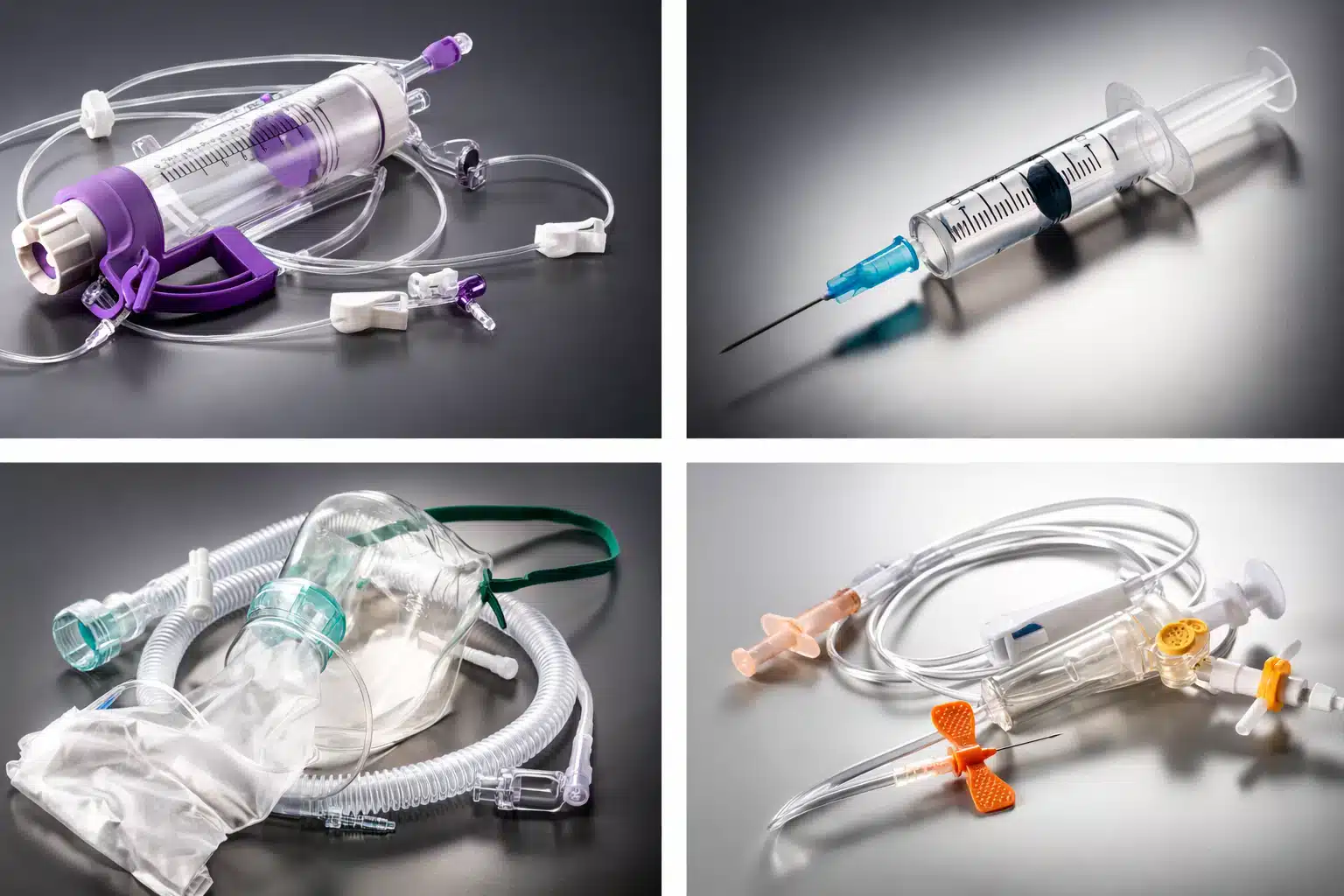
Medical equipment components are precision parts used in healthcare devices, laboratory instruments, diagnostic systems, and hospital equipment. These components form structural housings, protective covers, mounting panels, internal supports, and interface elements that allow medical devices to operate safely and reliably.
In many healthcare and laboratory environments, plastic materials are selected because they offer excellent chemical resistance, low weight, electrical insulation, and the ability to be manufactured to tight tolerances. Plastics are also suitable for applications requiring frequent cleaning and exposure to disinfectants.

Role in Healthcare Equipment Systems

Plastic components are used throughout medical and healthcare equipment where structural support, protection, and user interaction are required. These parts may be external panels visible to operators or internal components that support electronic systems, sensors, or mechanical assemblies.


Typical functions include:

  • Housing sensitive electronics

  • Supporting internal device structures

  • Protecting instruments from contamination

  • Providing user-access panels

  • Creating hygienic surfaces for clinical environments

  • Isolating electrical systems


Because medical equipment designs vary significantly between manufacturers, many components must be fabricated according to engineering drawings rather than standardised product sizes.

meidcal new | Perspex Online
medical new | Perspex Online

Common Environments of Use

Medical equipment components are used across a wide range of healthcare and laboratory environments where reliability and cleanliness are critical.


These include:

  • Hospitals and clinical treatment rooms

  • Diagnostic imaging facilities

  • Medical laboratories

  • Pharmaceutical manufacturing environments

  • Dental clinics

  • Research laboratories

  • Medical device manufacturing facilities

  • Cleanroom production areas


In these environments, components must withstand regular cleaning, chemical exposure, and repeated use while maintaining dimensional stability.

Recommended Materials for Medical Equipment Components

Popular Medical Equipment Components

Custom Manufactured to Your Drawings

Medical device manufacturers and equipment integrators typically require components that match precise equipment layouts. Custom fabrication allows parts to be produced exactly as specified in technical drawings.


Manufacturing may be carried out using:

  • CAD models and technical drawings

  • Prototype samples

  • Engineering sketches or dimensional specifications


Custom production supports:

  • One-off prototypes for equipment development

  • Small batch manufacturing for specialised equipment

  • Ongoing production runs for device manufacturing


Components are produced in-house using precision fabrication equipment, allowing tight tolerances and consistent repeatability.

Typical Applications

Plastic components are used in a variety of medical equipment assemblies and supporting structures.


Common applications include:

  • Diagnostic equipment panels

  • Medical device housings

  • Laboratory instrument covers

  • Control interface panels

  • Internal mounting brackets for electronics

  • Equipment access panels

  • Protective instrument guards

  • Medical workstation surfaces

  • Equipment cable management panels


These parts help ensure devices remain protected, accessible, and easy to maintain.

Key Performance Requirements

Mechanical Requirements

Medical equipment components must maintain structural integrity while supporting device assemblies and protecting internal systems.


Important characteristics include:

  • Impact resistance

  • Structural rigidity

  • Dimensional stability

  • Resistance to cracking or fatigue

  • Precision tolerances for equipment integration

Hygiene & Cleanability Considerations

In healthcare environments, surfaces must be easy to clean and resistant to contamination.


Plastic components can be designed with:

  • Smooth surfaces that reduce bacterial retention

  • Rounded internal corners for easier cleaning

  • Minimal joints or seams

  • Resistance to repeated disinfectant exposure


Proper material selection helps ensure long-term performance in hygienic environments.

medical image | Perspex Online

Alternative Options:

All components used in this application are manufactured in-house using controlled, drawing-led production processes. We do not supply generic or off-the-shelf products. Each part is produced to specification to meet defined mechanical, environmental, and installation requirements.

Frequently Asked Questions

Can medical equipment components be manufactured to custom designs? +

Yes. Components are typically produced according to customer drawings, CAD files, or prototypes.

What plastics are commonly used in medical equipment components? +

Common materials include polycarbonate, acrylic, HDPE, and PVC depending on the application requirements.

Are plastic components suitable for hospital environments? +

Yes. Many engineering plastics provide chemical resistance and smooth surfaces suitable for hygienic environments.

Can components include complex cut-outs and mounting features? +

Yes. CNC machining allows precise cut-outs, slots, and mounting holes to be produced.

Can transparent panels be manufactured for equipment displays? +

Yes. Acrylic or polycarbonate can be used for clear viewing panels.

Are prototypes available before production runs? +

Yes. Prototype parts can be manufactured to validate design before larger production batches.

Send Us Your Drawing

Selecting the correct material and fabrication approach for automotive and fleet applications requires consideration of load type, environment, installation method, and service life expectations.