
Ute Dividers
Overview
Where It’s Used
Trade utes carrying tools and equipment
Service and maintenance vehicles
Agricultural and site vehicles
Fleet utility vehicles
Mining, construction, and council vehicles
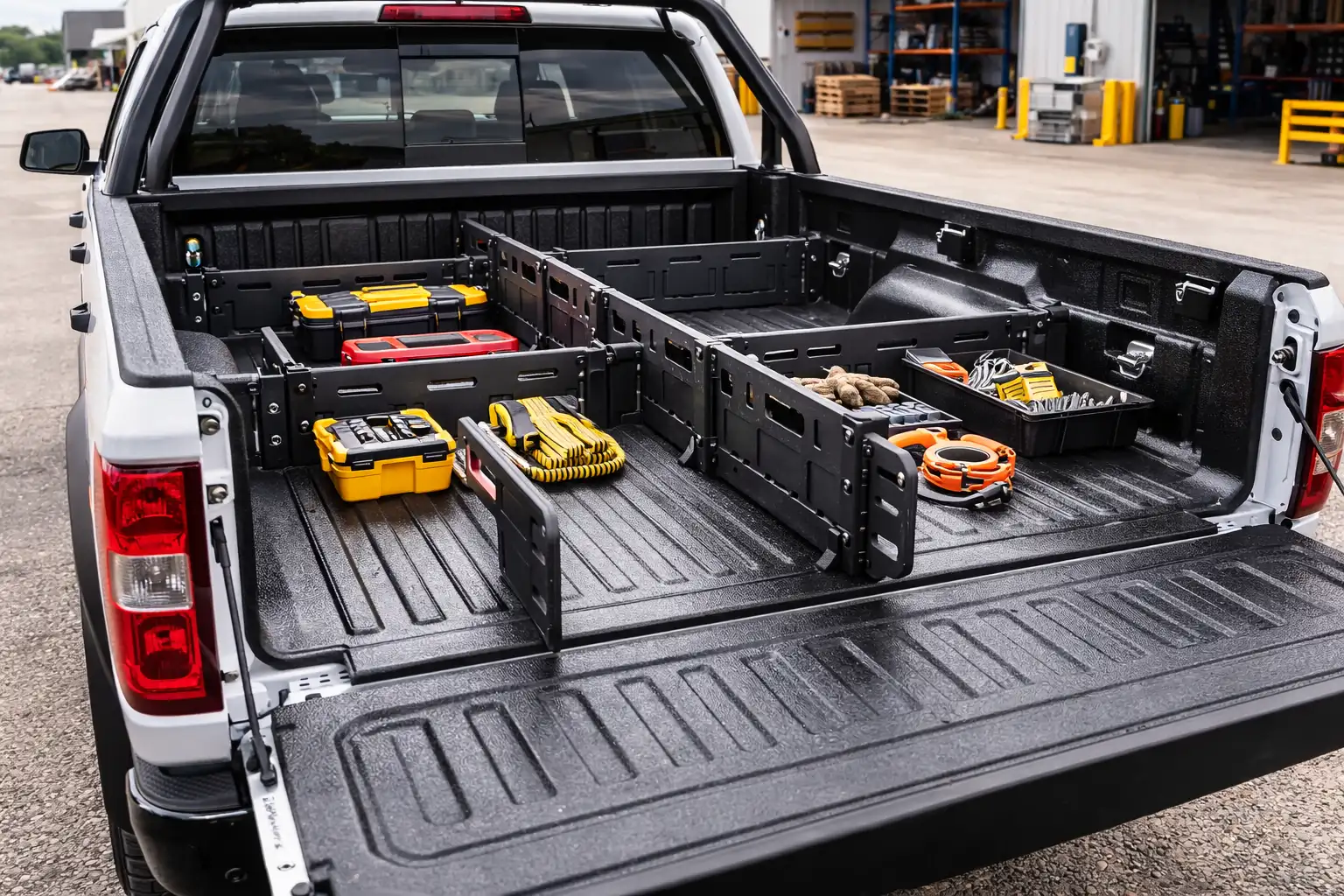
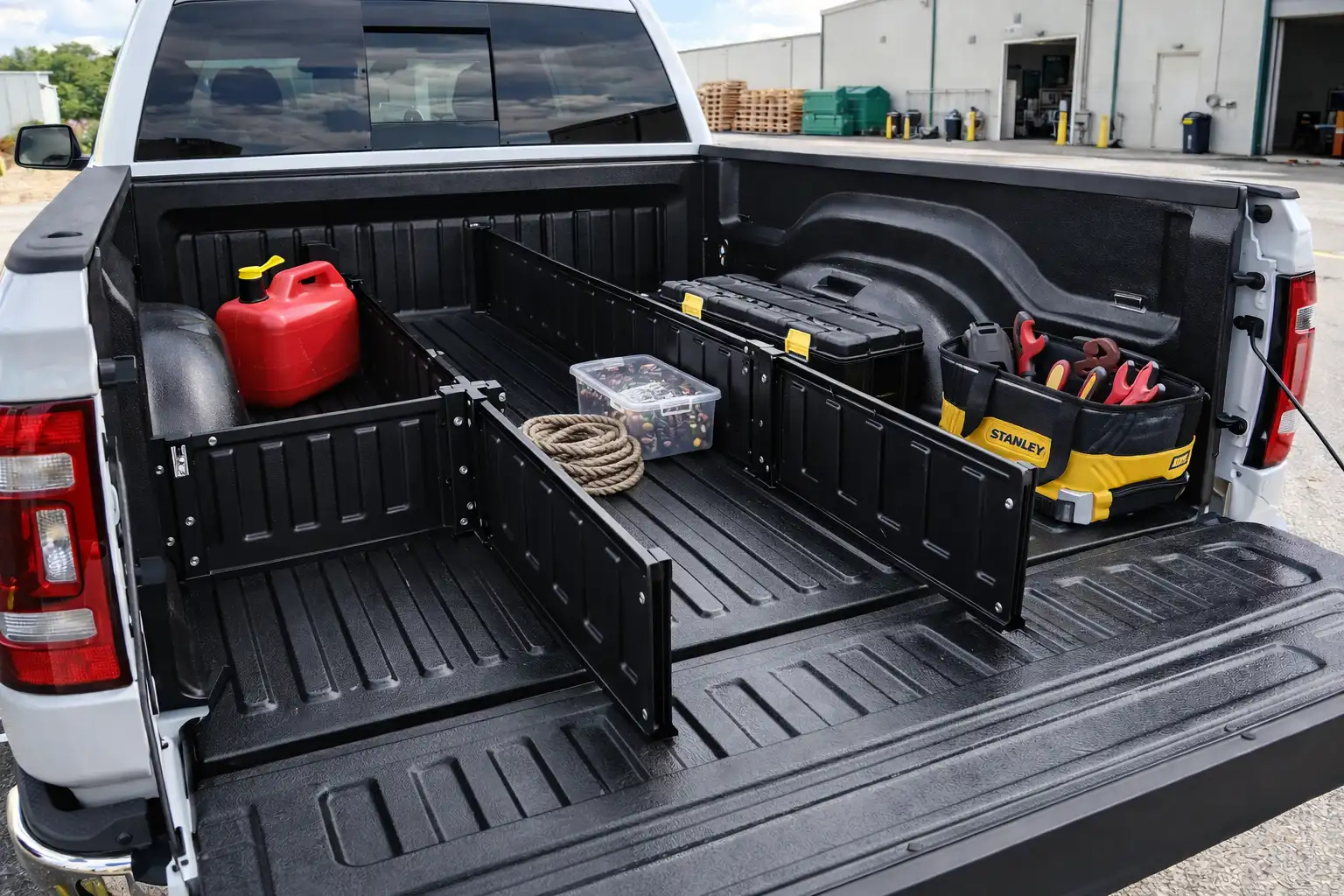
Dividers can be fixed, removable, or modular, depending on application needs and load type.
Why Plastic Is Used
Plastic is widely specified for utes dividers because it:
Is lightweight and easy to handle
Offers impact and abrasion resistance
Resists corrosion and moisture
Can be machined or formed to complex geometries
Reduces noise and vibration
Can be fabricated to fit precisely to vehicle trays and accessories
Plastic dividers provide durability while allowing flexibility in design and installation.
Recommended Materials for Ute Tray Dividers
Custom Manufactured to Your Drawings
Ute dividers are typically drawing-led and fully customised.
We manufacture from:
CAD files (DXF, DWG, STEP)
Dimensioned tray layouts
OEM body builder drawings
Physical samples or templates
Production can accommodate:
One-off dividers for custom builds
Small batch or fleet repeat orders
Repeatable production for standardised fleet designs
All components are CNC machined in-house to maintain precision. Cut-outs for tie-downs, handles, or toolboxes are produced to specification.
Popular Ute Dividers
-
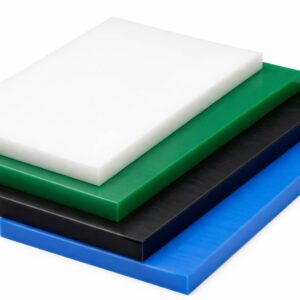
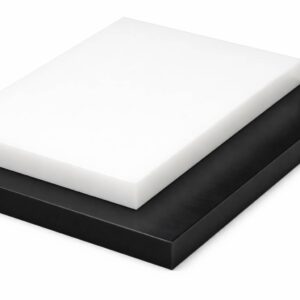
HDPE Sheet
$46.00 – $6,076.00Price range: $46.00 through $6,076.00 Select options This product has multiple variants. The options may be chosen on the product page -
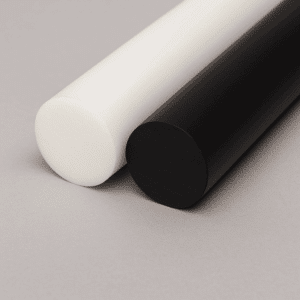
HDPE Rod – Black & Natural
$5.32 – $2,023.25Price range: $5.32 through $2,023.25 Select options This product has multiple variants. The options may be chosen on the product page -
Acetal (POM-C) Rod
$4.29 – $3,400.55Price range: $4.29 through $3,400.55 Select options This product has multiple variants. The options may be chosen on the product page -
UHMWPE Sheet
$271.00 – $9,821.00Price range: $271.00 through $9,821.00 Select options This product has multiple variants. The options may be chosen on the product page
Typical Applications
Tool compartment dividers
Modular cargo separation panels
Removable load partitions
Security dividers for fleet vehicles
Equipment organisation panels
Sections for hazardous or fragile load segregation
Sidewall or floor-integrated dividers
Adjustable modular panel systems
Key Performance Requirements
Mechanical
Impact resistance to protect cargo and tray
Edge strength for repeated handling
Resistance to cracking or deformation under load
Dimensional stability under vibration
Environmental
UV resistance for outdoor exposure
Moisture and corrosion resistance
Resistance to cleaning agents, oils, and chemicals
Material Selection Summary
Polycarbonate – Best for impact-prone or high-stress dividers.
HDPE – Suitable for general fleet or light-duty dividers.
Acrylic – Ideal for lightweight, non-impact dividers requiring visibility.
Choice depends on load type, environment, and operational requirements.
Manufacturing & Fabrication
Ute dividers are fabricated using:
CNC routing for precision profiling
Cutting and drilling for tie-downs and mounting
Chamfering or rounding edges for safety
Optional forming for curved or angled dividers
Machined recesses for flush-mounted hardware
Plastic welding may be used for multi-panel assemblies, though mechanical fixing is usually preferred.
Alternative Options:
All components used in this application are manufactured in-house using controlled, drawing-led production processes. We do not supply generic or off-the-shelf products. Each part is produced to specification to meet defined mechanical, environmental, and installation requirements.
Frequently Asked Questions
Thickness depends on load type; common ranges are 6–15mm.
Yes, modular and removable designs are possible.
Dividers serve to protect cargo and separate loads, not as primary structural elements.
Polycarbonate or acrylic options allow visibility while maintaining strength.
Yes. Single units or small batch orders are supported.
Mechanical fixing is standard; slots, brackets, or recesses can be designed.