

Polypropylene Sheet: Types, Fabrication and What to Order
Polypropylene sheet guide: homopolymer vs copolymer, solid vs foamed, fabrication tips and how to order cut-to-size PP sheet in Australia. Get an instant price.
Search for polypropylene sheet and you will find everything from thin, hollow signboard to thick, solid plate used in chemical tanks. They share a name but behave very differently. This guide focuses on the decisions that matter when you order: the type of sheet, the grade, how you plan to fabricate it, and what to specify so the sheet arrives ready to use.
Why choose polypropylene sheet in the first place
Polypropylene (PP) is a lightweight thermoplastic with good resistance to many acids, alkalis and solvents. It is tough, handles repeated flexing well (which is why it is used for living hinges), and it is easy to cut, machine, thermoform and weld. It is also generally more economical than many engineering plastics, so it is a sensible default when the job calls for chemical resistance without the cost of a higher-end polymer.
The trade-offs are worth knowing up front. PP has a low surface energy, so it resists most glues and printing inks. Standard grades are not naturally UV stable. And it is not the right pick where you need optical clarity or very high rigidity. If clarity is the goal, look at acrylic or polycarbonate instead.
Homopolymer vs copolymer polypropylene sheet
Most solid PP sheet is sold as either homopolymer or copolymer, and the choice affects performance.
Homopolymer: stiffer and more chemical resistant
Homopolymer is the usual choice for tank walls, linings, structural panels and parts where stiffness and chemical resistance come first. It is a little less forgiving of sharp impacts, particularly in cooler conditions.
Copolymer: tougher and more impact tolerant
Copolymer trades a little stiffness for toughness. It suits guards, trays, covers and parts that may be dropped, knocked or used in cooler environments. If you are unsure which suits your project, describe the use when you contact our team and we will point you to the right grade.
Solid sheet vs foamed and hollow polypropylene
Not every polypropylene sheet is solid. Choosing the wrong construction is one of the most common ordering mistakes.
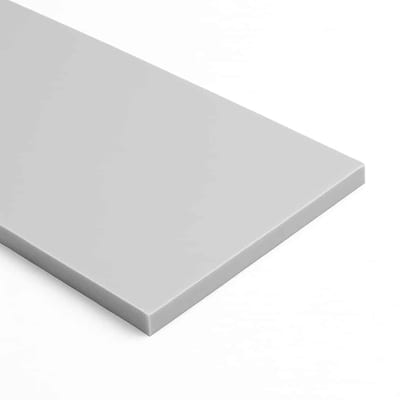
Solid sheet is the right choice for load-bearing parts, fabricated tanks, machined components and anything that needs to be welded into a robust assembly. Our polypropylene sheet is available cut to size for exactly this kind of work.
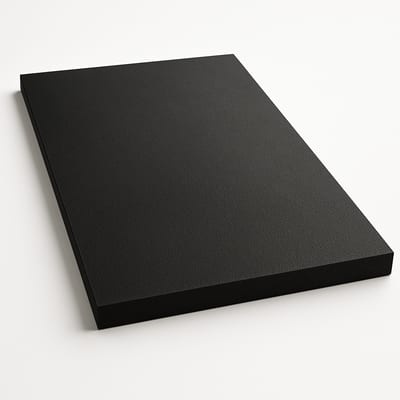
Foamed and lightweight PP boards suit displays, protective panels, packaging and lightweight fabrications where weight and cost matter more than structural strength. A product like Foamlite Uniboard ECO PP sheet is a good example of this category.
Twin-wall (fluted) PP such as Corflute is the lightest and most economical option, ideal for signage, temporary protection and packaging, but not for chemical containment or machined parts.
Fabricating polypropylene sheet
Polypropylene is forgiving to work with, provided you respect how it behaves.
Cutting and routing: PP cuts cleanly with sharp tooling. Dull blades and excess heat can smear the edge, so keep tools sharp and feed rates sensible.
Joining: Because solvent cements do not bond PP reliably, hot-air or extrusion welding is the standard method for liquid-tight joints. If your project involves seams, tanks or enclosures, our plastic welding service can take care of it. For simple assemblies, mechanical fixings such as rivets, screws and bolts work well when you allow for thermal movement.
Forming: PP can be heat-bent and thermoformed, but it has a relatively narrow forming window and shrinks as it cools, so allow for that in the design.
Printing and labelling: The same low surface energy that stops glue also stops ink. If graphics matter, ask about surface treatment before ordering.
Where polypropylene sheet performs best
PP sheet earns its place in chemical handling, laboratory and industrial settings, food-handling equipment (with an appropriate grade), guards, jigs, trays and general fabrication. For a deeper look at one of the biggest uses, see our page on chemical storage tanks , where material choice and weld quality are critical.
If you need a tougher wear surface or better performance outdoors, a different polymer may suit the job better. Our team can compare options with you before you commit.
What to specify when you order
To get the right sheet first time, have these details ready:
The construction (solid, foamed or fluted) and the grade (homopolymer or copolymer). The thickness and finished dimensions. The colour you need. The chemicals, temperatures and loads the part will face. Whether it will be used outdoors, and whether it needs to be food-safe. Tell us how the part will be joined too, because that affects both thickness and edge preparation.
Ordering cut to size saves wastage and fabrication time. Use the cut-to-size pricing calculator to see your price before you commit. Prices are shown ex-GST.
Choosing the right polypropylene sheet
The right polypropylene sheet comes down to three questions: is it solid or lightweight, homopolymer or copolymer, and how will it be fabricated and joined? Answer those, and the rest is thickness, colour and size. Get them wrong, and you risk a sheet that is too brittle, too flimsy or impossible to glue.
Ready to order? Get an instant cut-to-size price with our pricing calculator, or contact us for a quote and we will help you choose the right polypropylene sheet for your project.