

Buying Perspex at Bunnings vs Cut to Size: What to Check First
Comparing Perspex sheet from Bunnings against a cut-to-size supplier: sheet sizes, thickness and colour range, material grades, and when each one is the right call.
If you have searched for Perspex at Bunnings, you are almost certainly weighing up two things: can I get what I need off the shelf today, or do I need it cut properly. Both are reasonable answers depending on the job. This page sets out the actual differences so you can pick without guessing.
What a hardware store is good at
A hardware store carries acrylic sheet in a small set of standard sizes and thicknesses, on the shelf, today. For a broken window pane, a quick shelf, a cover you are going to trim yourself, or anything where you just need material in your hands this afternoon, that is genuinely the better option. Stock varies by store and changes over time, so it is worth ringing ahead.
Where it starts to work against you is when the finished size matters, when you need a thickness or colour outside the standard few, or when trimming a large sheet down would leave you paying for material you throw away.
What cut to size actually means
You give us the finished dimensions and we cut to the millimetre. You are buying the piece you need rather than a standard sheet plus a cutting job. Our online pricing calculator prices it before you order, so there is no waiting on a quote for a straightforward cut.
That matters most when the edge is visible, when the piece has to fit an existing opening, or when you are making more than one of something and want them identical.
Range is the real difference
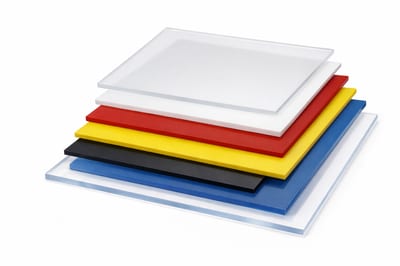
A hardware aisle carries the handful of options that suit the most common jobs. Our acrylic and Perspex sheet range runs from 2mm to 50mm depending on colour and finish, in clear, opal, tinted, frosted, mirror and a wide colour range, in both cast and extruded grades.
Cast versus extruded is worth knowing about. Cast acrylic machines and laser cuts more cleanly and gives a better polished edge, so it suits signage, displays and anything where the finish shows. Extruded is more economical and is fine for glazing and general panels. A hardware store will not usually tell you which one you are buying.
Beyond acrylic
Acrylic is not always the right material. If it needs to take an impact, polycarbonate is far tougher. For cutting boards, wear strips and food-safe work, HDPE is the usual answer. Part of what you get from a plastics supplier is being told when the obvious material is the wrong one.
So which should you use
- Go to the hardware store when you need something standard, today, and you are happy to cut it yourself.
- Order cut to size when the dimensions have to be right, when you need a thickness, colour or grade outside the standard few, or when you want the edge finished properly.
- Talk to us when you are not sure the material is right, or the part needs drilling, polishing, bending or fabricating as well as cutting.
If you know your sizes, you can price a cut-to-size order now and have it delivered Australia-wide. If you are not sure what you need, send us the details and we will tell you honestly whether it is worth cutting for you.